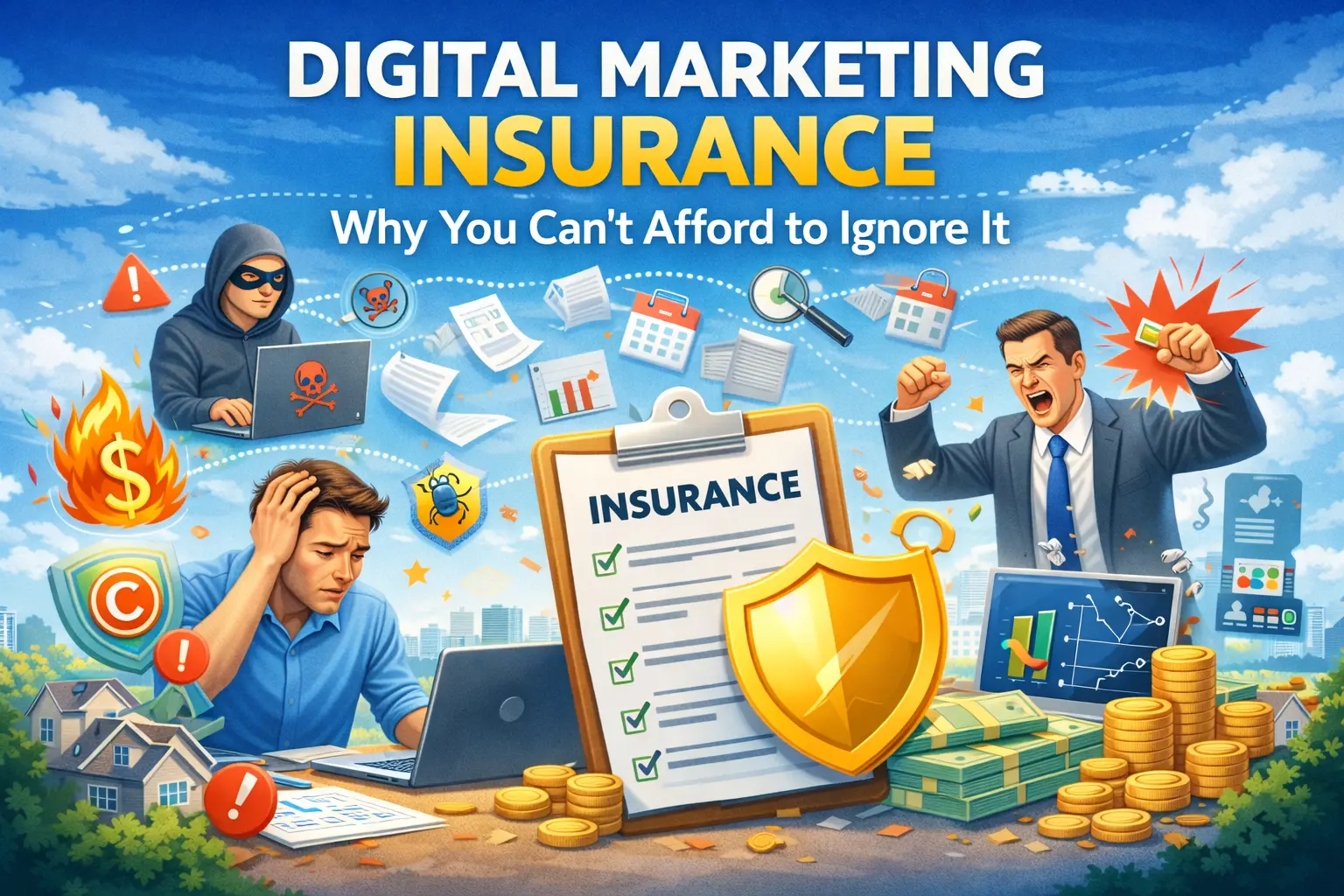
You put in the long hours, dial in the SEO, and juggle client calls – all with the hope that your campaigns will bring in the results. However, even with all that hard work, an agency like yours is exposed to a whole host of potential pitfalls that go way beyond a disappointing quarter or a blunder with a social media ad. A simple error in a client’s analytics data, a misplaced (albeit honest) use of a copyright in a post, or even a complete data hack can send your whole business into a tailspin.
Digital marketing insurance is a vital safeguard that creative types often overlook. Still, honestly, it should be right up there with rent and payroll on your list of priorities. It serves as your backup plan in the event of a catastrophe, safeguarding your income, reputation, and means of subsistence.
This guide cuts to the chase and gives you the lowdown on digital marketing insurance – what it is, why it matters, and how to get the right coverage without breaking the bank.
What Is Digital Marketing Insurance?
At its heart, digital marketing insurance is a collection of specific coverage types designed to protect marketing pros from the risks they face. It’s not like the standard policy a coffee shop or a construction company would carry – this insurance is tailored specifically to the challenges of working online.
It focuses heavily on the liability associated with your professional services. If a client comes after you claiming your advice cost them money, or if you are sued for using a licensed image without authorization, general business insurance isn’t going to cut it. You need specific coverage that accounts for the digital landscape.
Just about anyone who offers marketing advice, manages ad spend, or handles client data should have some form of this protection in place. It serves as a buffer between a lawsuit and your business bank account.
Why Digital Marketing Agencies Need Insurance
The digital world is a fast-paced beast, and that speed often leads to oversights – and oversights can lead to lawsuits. Here are the main reasons agencies need to have active policies in place:
Client beefs and contract hassles
Clients come with high expectations & when things fall short, they can get pretty steamed up. If they claim you screwed up a contract, blew a critical deadline, or strayed from the agreed scope of work, they’re likely to sue for damages. Even if everything ends up being a wild goose chase, the legal fees to defend yourself can be a severe, crippling blow.
Mistakes in campaigns, analytics, and reporting
Just think about it – if you accidentally crank that daily ad budget up to $1000 instead of $100, you’re talking about wasting thousands of your client’s dollars in an instant. Or maybe you made a simple mistake in a report that led your client to make some dodgy financial decisions. Yeah, stuff like this can be a real trigger for insurance claims, and it often happens in the blink of an eye.
Intellectual property landmines
Writing copy is a minefield of potential copyright infringement, and you never know when they’re going to get you. You can accidentally infringe on a photo in a stock photo library or come up with a slogan that is a tiny bit too similar to someone else’s trademark. Lawsuits over intellectual property are expensive and a real headache.
Data breaches & cyber incidents
If your agency holds people’s passwords, customer lists, and credit card details, you need to worry about being hacked or accidentally exposing client data. If that happens, you’re on the hook for the fallout – we’re talking about notification costs, fines & legal settlements. EEmployee-relatedliabilities
If you have a team, then you’ve got employer risks. An accident could happen to an employee on the job, or a former staff member might come after you with a wrongful termination lawsuit as a result.
Types of Digital Marketing Insurance Coverage
There ain’t no single ‘marketing insurance’ button to press. So, you’ll probably end up needing to mix & match different policies – it’s not a one-size-fits-all situation.
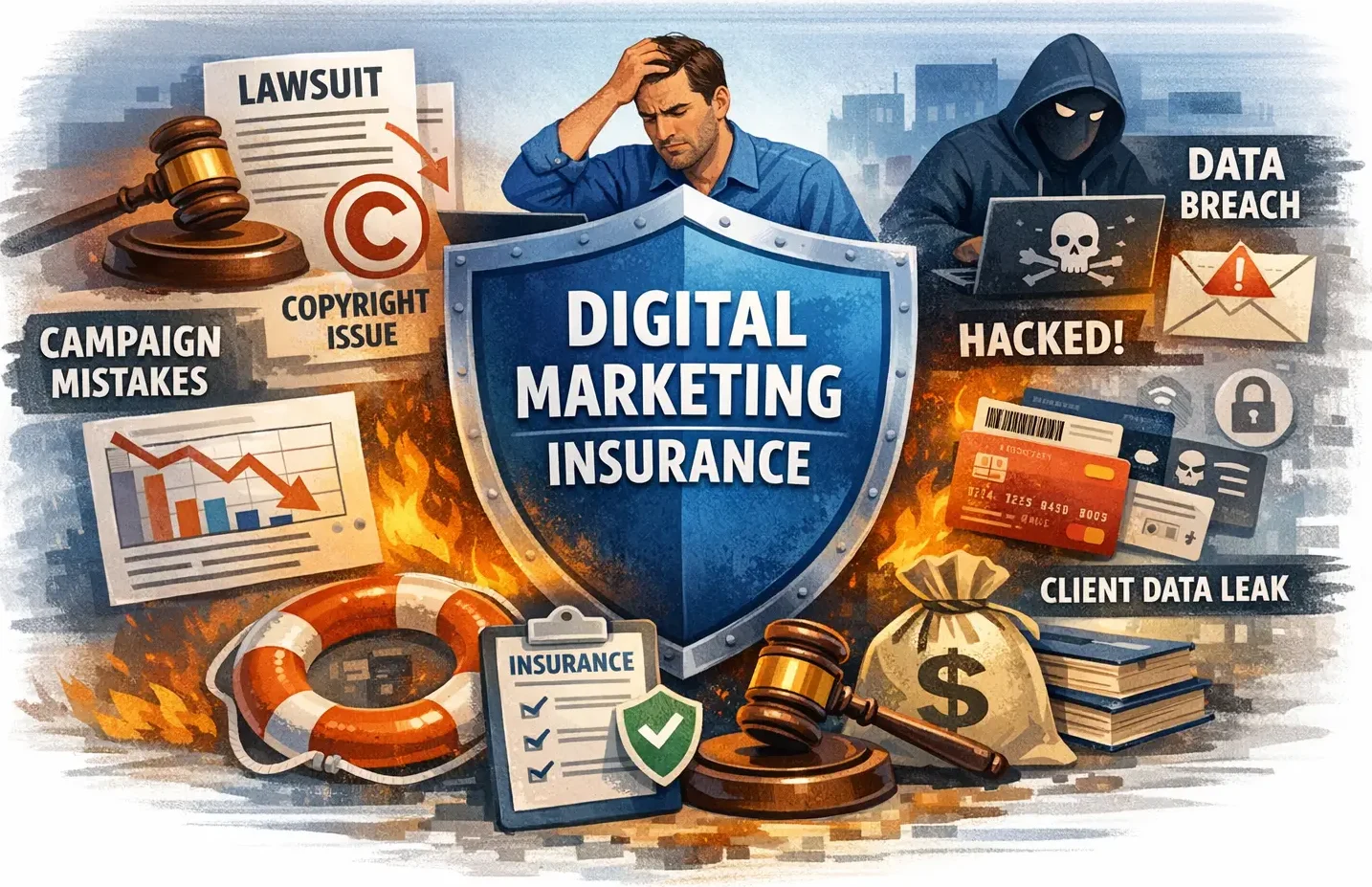
Professional Liability Insurance (Errors and Omissions)
This is the top policy for marketers, plain & simple. It will cover you if a client claims your work was substandard, late, or just plain inaccurate.
- What it covers: Mistakes on your part, missed deadlines, undelivered services & all those accusations of being just plain sloppy in your work.
- Real-world scenario: You’ve had a client come after you because your SEO strategy didn’t rank them on page one & they’re claiming it cost them money.
General Liability Insurance
This is pretty standard for most businesses. It helps protect against accidents.
- What it covers: Bodily injury to some poor soul who just happened to trip on your office floor or damage to their laptop the next time they stop by for a meeting.
- When it applies: If a client comes to visit & decides to trip over one of your cables, or if you spill coffee all over their laptop in the middle of a meeting – it’s a pretty rare occurrence for remote agencies, but typically it’s a given for most businesses and is usually written into client contracts anyway
C.yber Liability Insurance
For digital businesses, this one’s becoming pretty non-negotiable these days.
- What it covers: All those pesky costs that come with data breaches – like legal fees, customer notifications, and the occasional ransom payment
- Client trust: It sends a pretty clear message to your clients that you take their data security seriously.
Business Owner’s Policy (BOP)
A BOP is basically a one-stop shop. It usually bundles General Liability with Commercial Property insurance.
- Perks: Usually works out cheaper than buying each policy separately
- Who is it for: Typically, agencies with a physical office or expensive equipment will get the most out of a BOP.
Workers’ Compensation Insurance
If you’ve got employees, then the law probably says you need this one.
- What it covers: Medical bills & lost wages for the poor soul who gets sick or gets hurt because of their jobforn you
- Scope: Applies to both office teams and, for a lot of places anyway, even remote workers who have to put up with repetitive strain injuries like carpal tunnel.
Who Needs Digital Marketing Insurance?
If you’re making a living growing other businesses, you’d better get protected. That includes:
- Digital marketing agencies: Full-service shops handling strategy, execution & the whole nine yards
- SEO consultants and freelancers: Individuals who advise on search rankings & site structure
- Social media managers: Just your average Joe posting content on behalf of brands
- PPC and paid ads specialists: Experts who manage budgets on Google Ads, Meta, and the like
- Email marketers and automation experts: Those who have to worry about large databases of customer contacts
- Content creators: Just writers, designers, and video editors producing assets for brands
What Digital Marketing Insurance Typically Covers
When you pay up your premium, you’re really just buying a safety net to protect you & your business in the event of a certain situation.
- Client lawsuits and legal defense: Lawyers don’t come cheap – that’s where your policy comes in, to pay for your defence, any judgments or settlements up to the limit you’ve set.
- Contract disputes: You know, when a client says you didn’t do what you promised in the contract.
- Copyright infringement claims: That’s when someone accuses you of swiping an idea, ima,ge or text that wasn’t originally yours to keep.
- Advertising injury claims: You know, when you get sued for saying something nasty about someone in an ad.
- Cyber incidents and data loss: The costs of recovering lost data and dealing with a security breach.
What Digital Marketing Insurance Won’t Cover
Insurance isn’t a magic solution that will fix all your business problems – it’s got its limits.
- Guaranteed marketing results: Sorry, you can’t insure against a campaign that doesn’t perform as well as you hoped. If you promised a 5x ROI and only delivered a 2x ROI, insurance won’t cover the difference.
- Intentional wrongdoing: If you deliberately rip off a client or break the law, then unfortunately, you’ll have to pay the price on your own terms.
- Fraud and false advertising: If you decide to make up some wild claims about your own services, then that’s on you – insurance won’t bail you out.
- Contractual penalties: If your contract specifies that being late will result in a fine, that’s usually your responsibility, not the insurers.
How Much Does Digital Marketing Insurance Cost, Anyway?
The price of insurance varies a lot depending on your business.
- Factors that drive up the price: Your annual revenue, how many employees you have, where you’re located, and your claims history – all these things come into play.
- Your risk level: A freelance blogger is less of a risk than an agency managing multi-million dollar ad budgets.
- Coverage limits: The higher your coverage limit, the more you’ll have to pay in premiums.
- What you can expect to pay: If you’re a solo freelancer,r you might pay between $400 and $800 a year for a basic Professional Liability policy. But if you’re a growing agency with staff, you could be looking at anything from $1,500 to over $5,000 a year, depending on the bundle of policies you choose.
How to Pick the Right Digital Marketing Insurance Policy
Buying insurance can be a nightmare, but breaking it down helps, I guess.
- Look at your genuine risks: Take a close look at your contracts and work out what’s the worst that could happen if you mess up – that’s what you need to cover.
- Don’t skimp on limits: A $1 million policy sounds like a lot, but legal fees can eat that up pretty fast. Make sure your limit matches the size of your clients.
- Watch out for red flags: Avoid policies that have some crazy restrictive exclusions regarding media or copyright – that’s the core of your business, after all.
- Ask the right questions: Ask your broker about “media liability” and if it’s included in the Professional Liability policy.
Common Insurance Mistakes Digital Marketers Make
Do try to avoid these common pitfalls – they’ll leave you with no cover at all when you need it most.
- Relying just on General Liability: Loads of marketers buy a cheap General Liability policy and think they’re done – but this leaves them wide open to lawsuits about the quality of their work.
- Under-insuring: Buying the cheapest policy might save you $200 now, but if the coverage limit is too low,w you could end up paying a lot more later on.
- Not upping your coverage: As your agency grows and your revenues go up from $100k to $1M, your risks change – your policy needs to change too.
- Ignoring cyber liability: Thinking, ” Oh, I’m small, no one will hack me,” is a pretty dismal way to be. Small agencies are prime targets for cyberattacks.
Digital Marketing Insurance for Freelancers, Agencies, and Everyone Else In Between
The needs of a solo operator are – let’s face it – pretty different from those of a big agency.
Freelancers usually just need a basic Professional Liability policy to meet their client contracts. You know, the one that won’t break the bank and covers the usual stuff that can go wrong with advice and deliverables. And don’t worry, budget-friendly options do exist, starting at just $30 a month.
Agencies, on the other hand, need something a lot more comprehensive. They need Workers Comp for staff, a higher liability limit,s and a solid Cyber insurance policy to boot. And let me tell you, when a freelancer starts hiring subcontractors or even full-time staff, it’s time to bump the policy up in a hurry.
Final Checklist Before You Buy Your Digital Marketing Insurance
Before you actually go and sign on the dotted line, do yourself a favour and run through this quick list:
- Got The Right Coverage?: You’ve got Professional Liability and Cyber coverage, right?
- Know What You’re Buying: Have you got enough coverage in place to cover your biggest client?
- Read The Fine Print: Do you actually know what isn’t covered in this policy?
- Check Compliance: Does this policy meet the requirements in your client contracts? You don’t want any nasty surprises down the track.
- Scaling Up: Can you easily add more coverage as you grow?