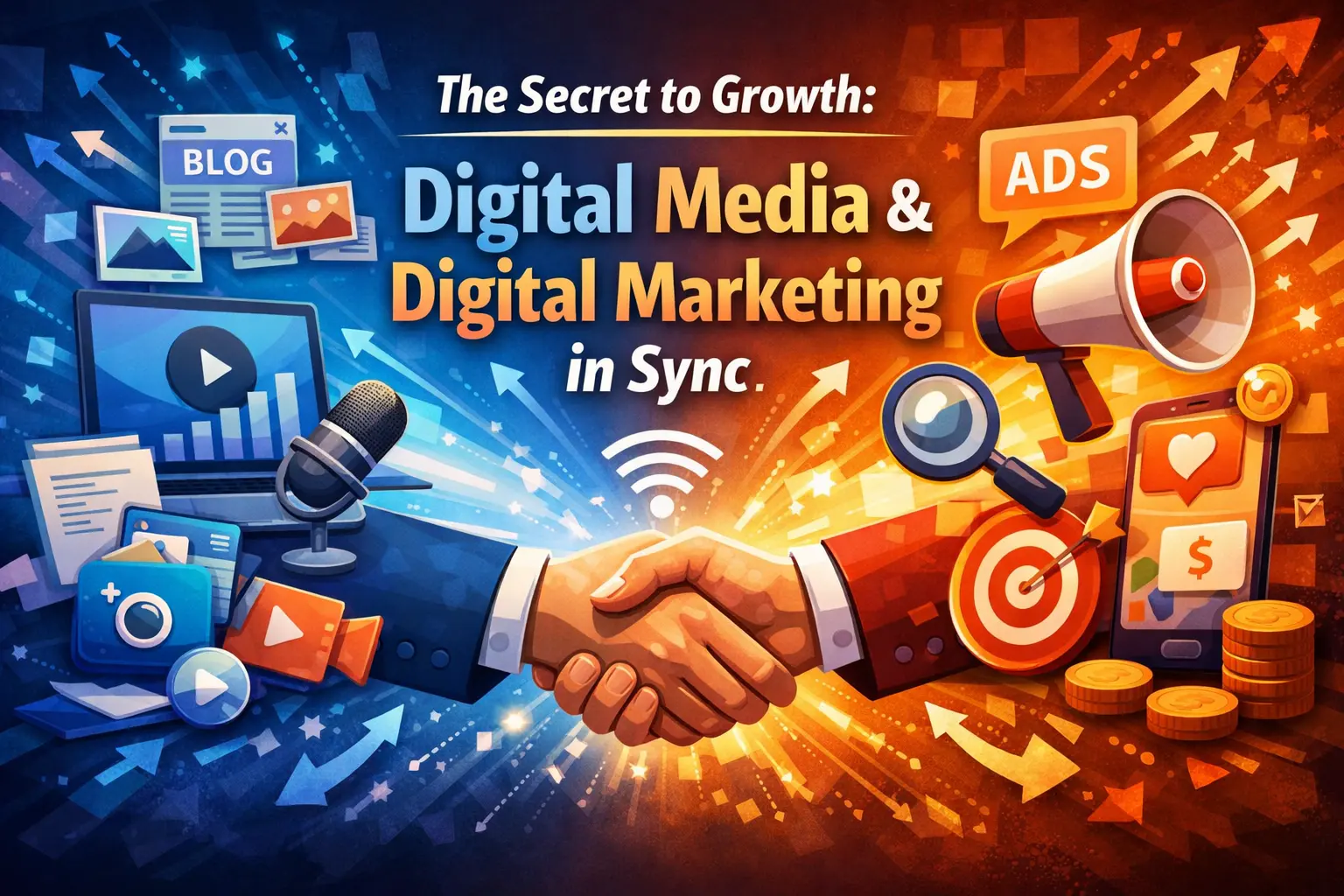
Many business leaders seem to treat their online strategy like a big messy box of tasks – lumping together content creation, ad spend, and social posting and crossing their fingers that it all somehow magically comes together. But the truth is, there is a world of difference between digital media and digital marketing. Those who can grasp this distinction – and understand how one is different from the other – will be the ones to take their business to the next level.
One feeds the beast, the other makes it roar. If you’ve got amazing media but don’t know how to market it, nobody even notices it exists. Conversely, if you’ve got fantastic marketing but the content is lacking, then you’re just throwing money down the drain. Let’s break it down – one by one – how these two aspects function separately and what happens when they start feeding off each other to drive some actual growth.
What is Digital Media?
In a nutshell, Digital Media is your actual content – the stuff you own, rent, or create to get your message across. That’s the “essence” of your online presence – the “what”.
Types of Digital Media
There is a whole lot of Digital Media out there, and some of the most common forms include:
- Your website/blogs: That is your home turf. That is the area in which you have control.
- Social media platforms, e.g., posts on Instagram, LinkedIn, or X (newly named).
- Audio & Video: Podcasts, Audio or Video Clips on YouTube.
- Visuals: Infographics, online advertisements, layouts of mobile apps.
Your Digital Media is what actually gets eyeballs on your content, and it matters because it provides the value, the entertainment, or the information that people are actually looking for.
What is Digital Marketing?
So if Media is the “what”, then Digital Marketing is the “how”. It’s the strategy and tech you use to get your media in front of an audience that actually cares. Plain and simple, the whole idea is to get more eyeballs on that content and convert them into customers.
Key Digital Marketing Channels
To get that message out there, you need a way to deliver it – and that’s where these channels come in.
- Search Engine Optimization (SEO): getting your Media to rank higher in search engine results so people can actually find it.
- Pay-Per-Click (PPC): Paying for ad space to get your media in front of people immediately.
- Social Media Marketing: Using these platforms to put your Media in front of communities and engage them.
- Email Marketing: nurturing leads directly, one by one, through good old-fashioned email.
Digital Media and Digital Marketing’s Relationship
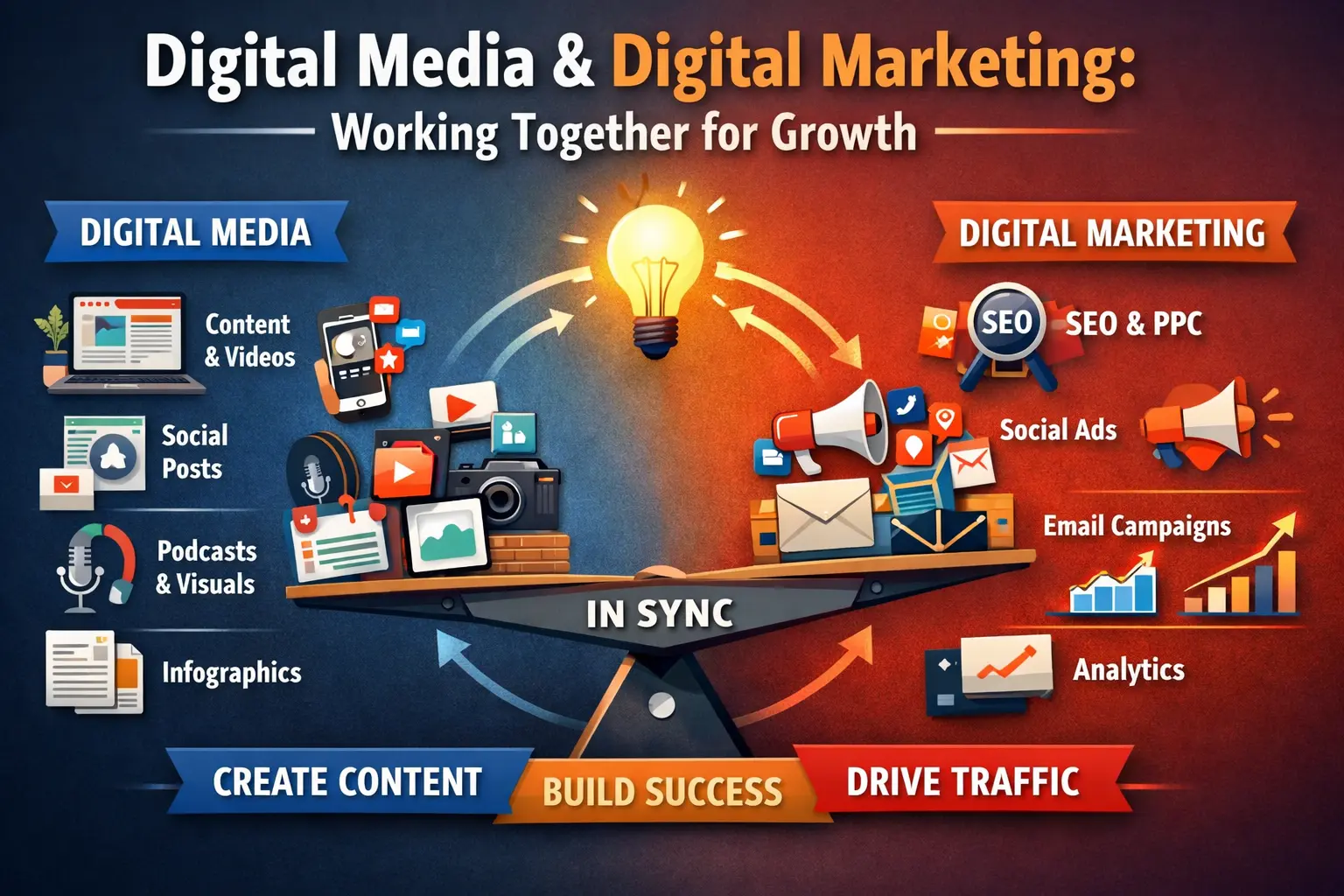
The relationship between digital media and digital marketing is very much similar to a seesaw. You just can’t have one without the other.
Think of Digital Media as the foundation – the blog post, the video, or the landing page. Digital Marketing is the way you get that asset in front of the right eyes. Marketing brings the attention, but the Media is what actually makes the difference.
Why This Combo Drives Growth
When you finally get Digital Media and Digital Marketing working in tandem, you set off a cycle of visibility and trust. You get visibility through tactics like SEO or Facebook ads – and then once people click on it, high-quality Media (like a great video or an actually useful article) starts to build trust. It’s the perfect combo.
Data and Efficiency
Digital marketing is the source of all the data we need. We can see who’s clicking on what, when they’re clicking on it, and where they’re coming from. And that insight – it’s huge. It tells us which bits of digital media are flying high and which ones are bombing, so we can quietly cut our losses and put the cash to better use. It makes the whole process a heck of a lot more cost-effective than clunky old traditional advertising.
Real-World Examples
To get a handle on how digital media and digital marketing go hand-in-hand, have a look at these everyday scenarios:
- The big guide: You write a meaty, comprehensive guide (That’s the media bit). You then use an email newsletter and some SEO know-how to make sure people actually read it (That’s the marketing bit).
- The product demo: You film a video showing your product in action (Media). You then run a YouTube ad campaign to target the people who might actually be interested (Marketing).
- The social media post: You design a graphic about a sale (Media). You boost the post on social media to get it seen by a wider audience (Marketing).
Benefits of Integration
Getting your media assets and marketing strategy working together in harmony can bring some really big benefits:
- Tight Targeting: With the right data in your hands, you can serve up specific media formats to people who actually give a hoot about them – folks who are genuinely interested in what you’ve got to say.
- Consistent Vibe: Your brand voice comes across loud and clear – whether it’s in the ad or on that landing page of yours. No surprises here, people know exactly what they’re getting from your brand.
- Long-term Traffic: You know those really good evergreen blogs you create and market well? Yeah, if you do those right, you can keep getting traffic for years to come. Years!
Challenges to Watch Out For
Of course, there’s no such thing as a free lunch. Managing your digital media and marketing efforts comes with its fair share of headaches.
- Content Overload: Let’s face it, there’s a lot of junk online, and even if you’re doing some great marketing, if your media doesn’t cut it, no one’s going to notice.
- Algorithm Changes: Those platforms just love to change the rules of the game on us, don’t they? So, you’ve got to stay on top of what’s working and what’s not – or risk getting left behind.
- Working Out ROI: Figuring out whether some bit of media or marketing channel is actually driving sales can be a real pain in the neck.
Best Practices for Success
To make the most of your digital media and marketing efforts, just keep these basics in mind:
- Make Media That Matters: Don’t just churn out stuff for the sake of it. Make media that actually helps real people solve real problems.
- Choose the Right Platform: Don’t expect a 10-page whitepaper for CEOs to do well on TikTok; you get the idea.
- Stick to a Schedule: Publish regularly to build up that library of media assets and keep your audience coming back for more.
- Track and Adjust: Keep an eye on your analytics to see what’s working and make changes as you go – don’t be afraid to try something new.
Future Trends
The landscape of digital media and digital marketing is shifting – automation and personalization are on the way in. AI is making it easier to knock up some decent media, but it’s also cluttering up the market. The winners of the future will be the ones who use their data to create media that really speaks to people. And we’re also seeing a move towards video-first strategies and people looking up stuff on voice search.
Final Thoughts
The main thing here is to clearly separate the meat of your content from your marketing efforts, because let’s be honest, if you spend a lot on advertising but ignore your actual content, your business will struggle to get off the ground. On the flip side, you don’t want to be a business with some amazing content that nobody can ever see because you can’t seem to figure out how to get it out there. So if you want to succeed, you need to get your content and marketing working together in perfect harmony. Take a good, hard look at your strategy at this moment and make sure you’ve got the resources you need to make it happen – and not run out of steam before you even reach your goals.