Running a business feels like a juggling act a lot of the time. You’ve got ads running on Facebook and at the same time, new blog posts are going up on your website and are scheduled for next week, and meanwhile, your team is trying to get their head around the latest TikTok trends. You know, that busy work that keeps you up at night – but busy doesn’t always mean you’re getting the results you want.
A lot of brands fall into this trap of tearing their marketing activities into tiny little tasks and just ticking them off a checklist. The social team is sending all these memes out while the email team is sending off super-serious newsletters. The paid ads are promising one thing, but the website landing page is saying something entirely different. This scattergun approach just confuses the hell out of customers, and at the end of the day, it’s a waste of your budget.
When your marketing channels are all operating in separate little silos, you’re basically forcing your customers to do a bit of detective work to figure out what the heck you’re all about. And let’s be honest, most of the time they’re just not going to bother – they’ll just go off to a competitor who makes it easy to understand what they’re all about.
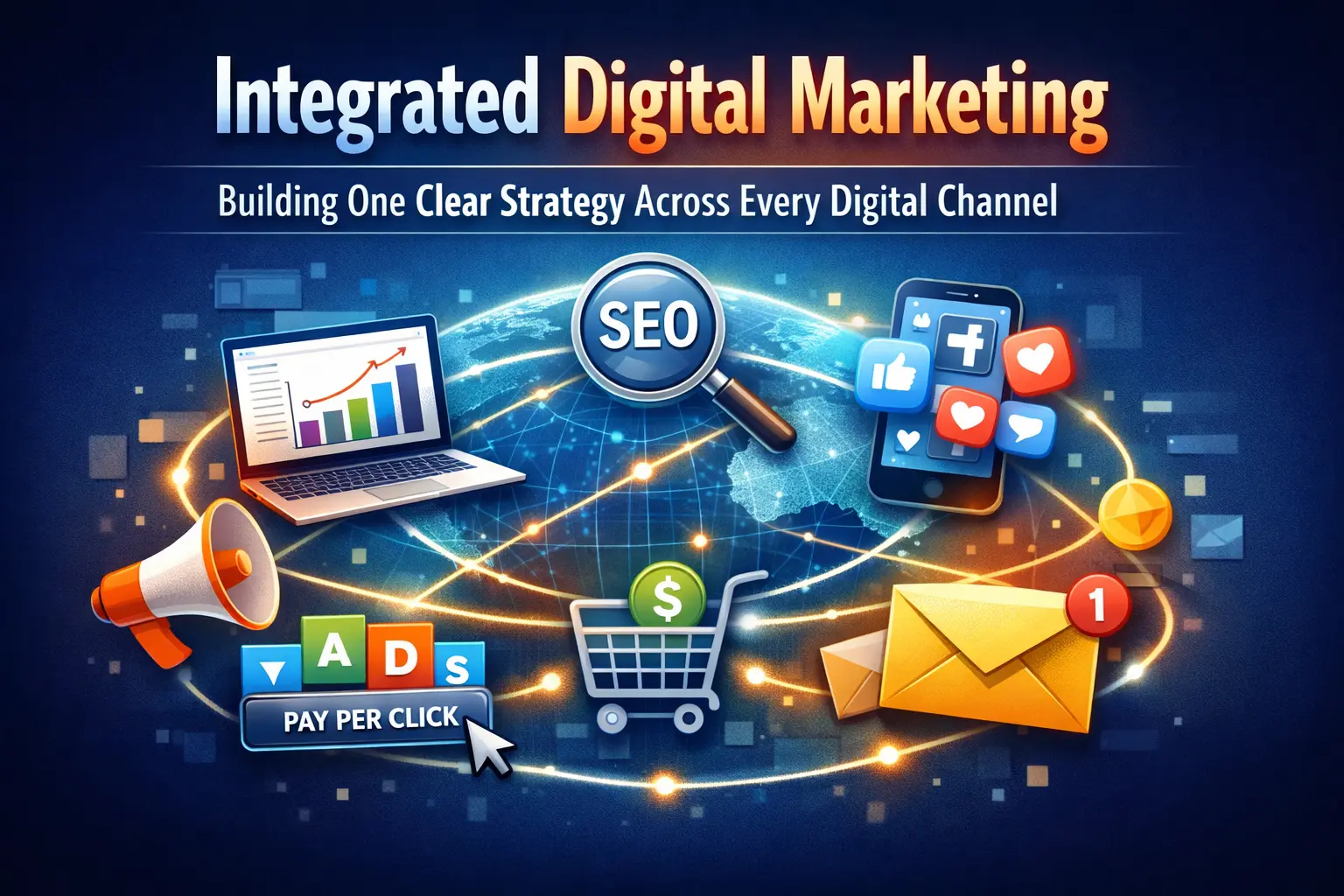
This is where integrated digital marketing kicks in and changes the game. It’s no longer just about juggling all these different channels – it’s about building a system that makes each bit of your marketing make sense with the rest of it.
What Integrated Digital Marketing Is and What It Is Not
At its core, integrated digital marketing is just a fancy way of saying you’re bringing all your messaging, branding, and strategy together across every single channel you use. You want to make sure a customer gets the same core message whether they’re reading your blog, scrolling through Instagram, or opening an email.
It’s not just about having a presence on every platform under the sun. Just because you’re posting on LinkedIn and running Google Ads and sending out a monthly newsletter, doesn’t mean you’re doing integrated digital marketing if all those channels are just talking at cross purposes. If your ads are targeting teenagers but your website sounds like a corporate law firm, that’s not integration – that’s just a contradiction.
True integration changes everything because it makes all your hard work pay off. You go from five separate channels shouting at the top of their lungs to being able to get your message across in a way that makes sense and gets results.
Why Integrated Digital Marketing Matters More Than Ever
The way people buy things has changed, big time. Gone are the days of watching one TV ad and then driving to the store to buy what you saw. These days, people are all over the place, bouncing from one platform to another, constantly.
A customer might stumble upon your brand through a Google search and then a week later see a retargeting ad on Facebook and a week after that sign up for your newsletter. If the message or offer changes at any of these touchpoints, you’ve basically broken trust with that customer.
Disjointed messaging is a major problem; it creates friction, and when you have a customer who’s been promised one thing but gets something entirely different, and they’re gone, lost to a competitor who gets it right.
Consistency is key here. When your branding and messaging are all consistently the same, customers start to recognize you instantly. And the beauty of it is that consistency also builds trust. It tells your customers that your business is put together, it’s professional, and it’s reliable.
Core Channels in Integrated Digital Marketing
A solid strategy is built on solid pillars. Yeah, new platforms come and go all the time, but these core channels are usually what form the foundation of a well-rounded integrated digital marketing plan.
Your Website: The One Piece of Real Estate You Truly Call Your Own
Your website – the only spot where you’re not at the mercy of changing social algorithms or skyrocketing ad costs. It’s the one thing that’s always yours. And that’s why, in our integrated approach, all of your other marketing efforts should funnel in here. This is where the magic happens – where your audience converts, and where your relationship with them deepens.
SEO & Content: A Perfectly Harmonious Union
SEO’s not just about tweaking a few technical things here and there – and nor is content just a bunch of words on a page. They need to work together like a well-oiled machine. Your content answers the questions your audience is asking, while SEO makes sure they can actually find those answers. When you get these two working in tandem, they drive that high-quality organic traffic that’s actually interested in what you’re selling.
Paid Ads: Boosting What Already Works
Paid ads can be super effective, but they’re most effective when they’re working in harmony with your organic efforts. If you’ve got a blog post that’s crushing it, throw some paid ads at it to drive even more traffic. And if a social post just so happens to go viral, why not amplify it with some paid ads to reach an even wider audience?
Social Media: Bringing Your Brand Personality to Life
Social media is the face of your brand – where you get to be your awesome self and engage directly with your audience. But here’s the thing: that personality needs to match the one on your website and in your emails. And it’s also an amazing channel for listening in on what your customers have to say and using that feedback to inform your content or product strategy.
Email: The Ties That Keep Everything Together
Email is your secret sauce. It’s how you keep leads warm who aren’t quite ready to buy yet – and by referencing your latest content, sharing some social proof, and offering them some exclusive value, you keep your brand top of mind until the time is right for them to convert.
So, How Do the Channels Actually Work Together?
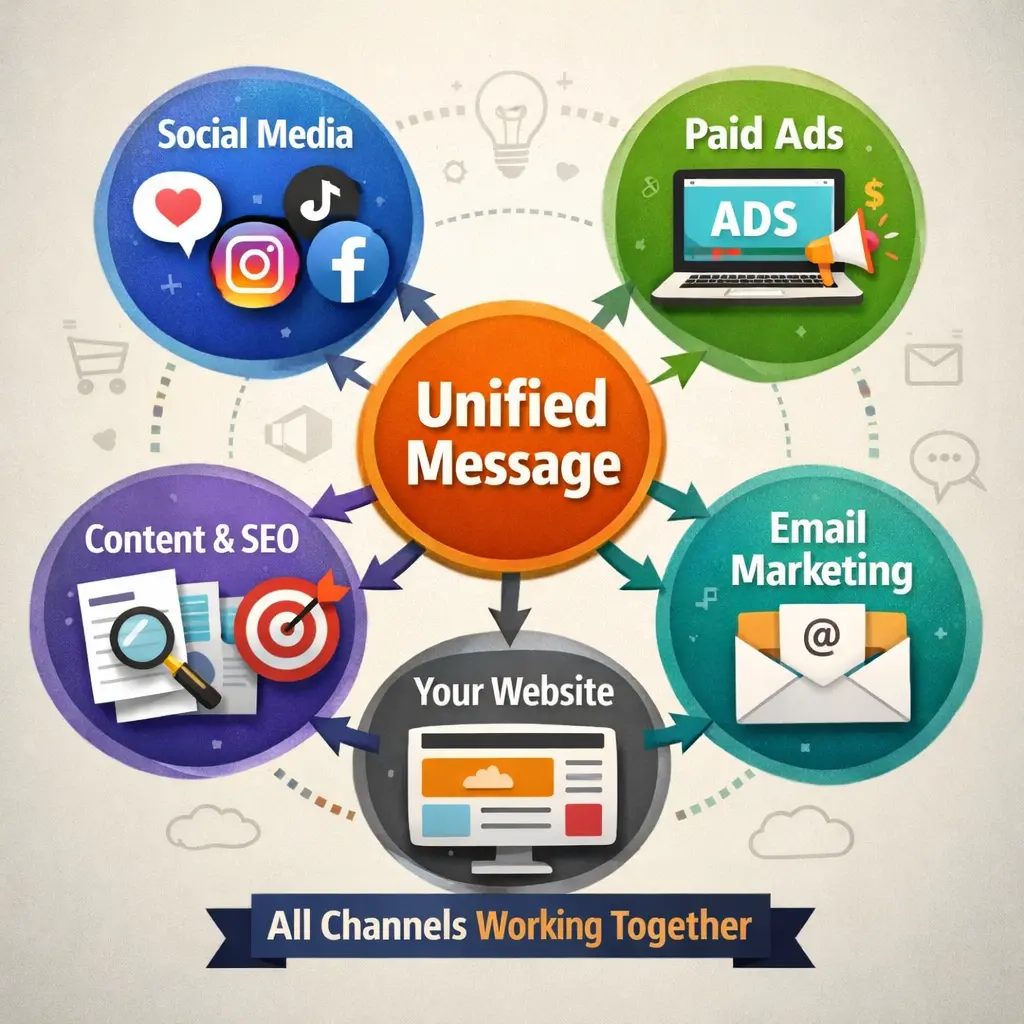
You get the channels, that’s a good start. Now, making them actually work together? That’s another story entirely.
The key is to have one core message that runs throughout everything you do. Let’s say your quarterly goal is to launch a new product – then that launch should be your focus in every single channel. Your blog should explain the problem it solves, your social media should tease the solution, your ads should target people looking for a solution to that problem, and your email should announce its arrival.
This approach also lets you repurpose content across channels like a pro. You don’t need to create a whole new piece of content for every single platform from scratch. That comprehensive guide on your blog can be broken down into:
- 3 short LinkedIn posts that give a quick rundown
- A simplified infographic for Instagram that makes the key points super clear
- A script for a YouTube video that breaks it down in a more in-depth way
- A topic for your next newsletter that’s a quick, bite-sized summary
Timing is also super important here. If you send out an email on a Tuesday offering a flash sale, make sure your social posts on Tuesday are highlighting the same sale, and make sure your website has a banner confirming it, too. When everything aligns, you create a “surround sound” effect that’s pretty much impossible to ignore.
Putting It All Together: Building an Integrated Digital Marketing Strategy
You can’t integrate what you haven’t planned for down the line – building a strategy is what starts long before you even think about putting out a single tweet.
- Set One Clear Goal: Ditch the idea that you can grow followers, increase sales, and launch a podcast all at the same time. Pick a primary business objective and stick to it.
- Choose the Right Channels: You don’t need to be on every platform – in fact, that’d be pretty confusing. If your audience is B2B executives, focus on LinkedIn and email. If you sell fashion, focus on Instagram and TikTok. Wherever your audience is, that’s where you should be.
- Create a Unified Plan: Think about what you want to achieve – if you’re running a summer promotion, make sure you define what that looks like on every channel you have chosen.
- Plan Campaigns, Not Tasks: Stop thinking in daily to-do lists like “post on Facebook today” and start thinking in campaigns like “distribute the new case study across all channels this week”.
Common Mistakes That Will Break Integration
Even with the best of intentions, brands manage to mess this up. The most common reasons are organizational silos – when the social media manager never talks to the content writer, integrated digital marketing just becomes impossible. Different teams end up sending different messages, and the customer is left feeling confused.
Another mistake is chasing every trend that comes along without a strategy. Just because a specific audio clip is popular on Reels doesn’t mean it fits your brand. Jumping on trends that don’t align with your core message dilutes your brand identity.
And then there’s the problem of measuring channels in isolation – that just hides the truth. If you only look at “last click” attribution, you might think your blog is useless because no one buys immediately after reading it. But that blog post might have been the first introduction that eventually led to a sale through an email weeks later. If you ignore the customer journey, you’ll end up making bad decisions about where to invest your resources.
Measuring Success in Integrated Digital Marketing
Success in an integrated system looks a lot different than success in a siloed one. You move away from vanity metrics like likes and shares towards more meaningful business metrics like conversions, retention, and lifetime value.
You need to track conversions across multiple touchpoints. Your analytics tools (like Google Analytics 4) let you see the path a user took – did they find you via search, return via social, and buy via email? When you understand these “assisted conversions,” you can start valuing your channels correctly.
Attribution is the key – it helps you understand which combination of channels works best. Maybe you find that users who read a blog post and subscribe to email have a 50% higher lifetime value than those who just click ads. Knowledge like that is pure gold.
A Real World Example of Integrated Digital Marketing in Action
Let’s take a look at how this flows in real life. Consider a company selling ergonomic office chairs.
- Content: They publish a REALLY good blog post on the topic of “How Back Pain Kills Productivity.”
- SEO: In addition to just slapping on keywords, they also make sure their post explains the benefits of an ergonomic chair on back pain and how to relieve it at work.
- Social: to get the most out of it, they also put together a short video on proper sitting posture and attached a link back to the blog post.
- Ads: They decide to run retargeting ads to people who actually read the blog post and give them a 10% discount on their first chair purchase.
- Email: A user clicks on the ad but doesn’t buy, so they see a pop-up offering a “Work From Home Setup Guide” in exchange for their email. They sign up. Two days later, they get an email with the guide and a reminder of the 10% discount deal.
- Conversion: they finally click on the link in the email and buy the chair.
This is what we call integrated digital marketing. Every step just sort of…follows on from the last one. The message is all the same (helping people be more healthy/productive) and the channels all work together to close the sale.
How to Take Your Digital Marketing to the Next Level with Integration
You don’t need to rip everything up and start again straight away. Start by taking a close look at what you do have. Go back and look at your last ten social posts, your last three emails, and your homepage. Do they all look like they are coming from the same company? Do they all use the same visual style? Do they all push towards the same goals?
Get the basics sorted first. Make sure your logos, fonts, and tone of voice all match. Then – get your teams together. A weekly 15-minute meeting between your emails, content, and social teams will sort out 90% of integration problems.
Companies that get this right know that it’s not the individual platforms that are the key. It’s all about how they fit together. By weaving them together, you create a stronger, more robust marketing engine that will actually drive some real growth.