We’re living in an era where personal branding is aggressively pushed as the only way to succeed, with influencers posting about every meal they eat, CEOs livestreaming their morning routines, and authenticity being about oversharing. But quietly, in the background, a different movement is picking up pace. It focuses on systems, not selfies.
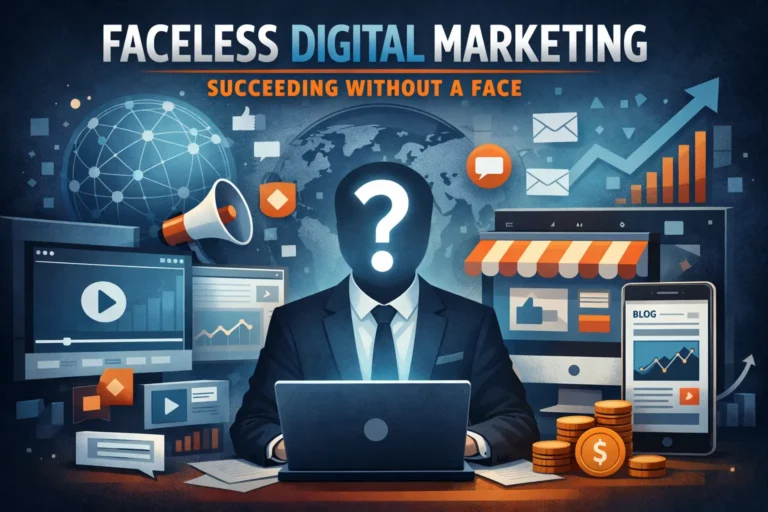
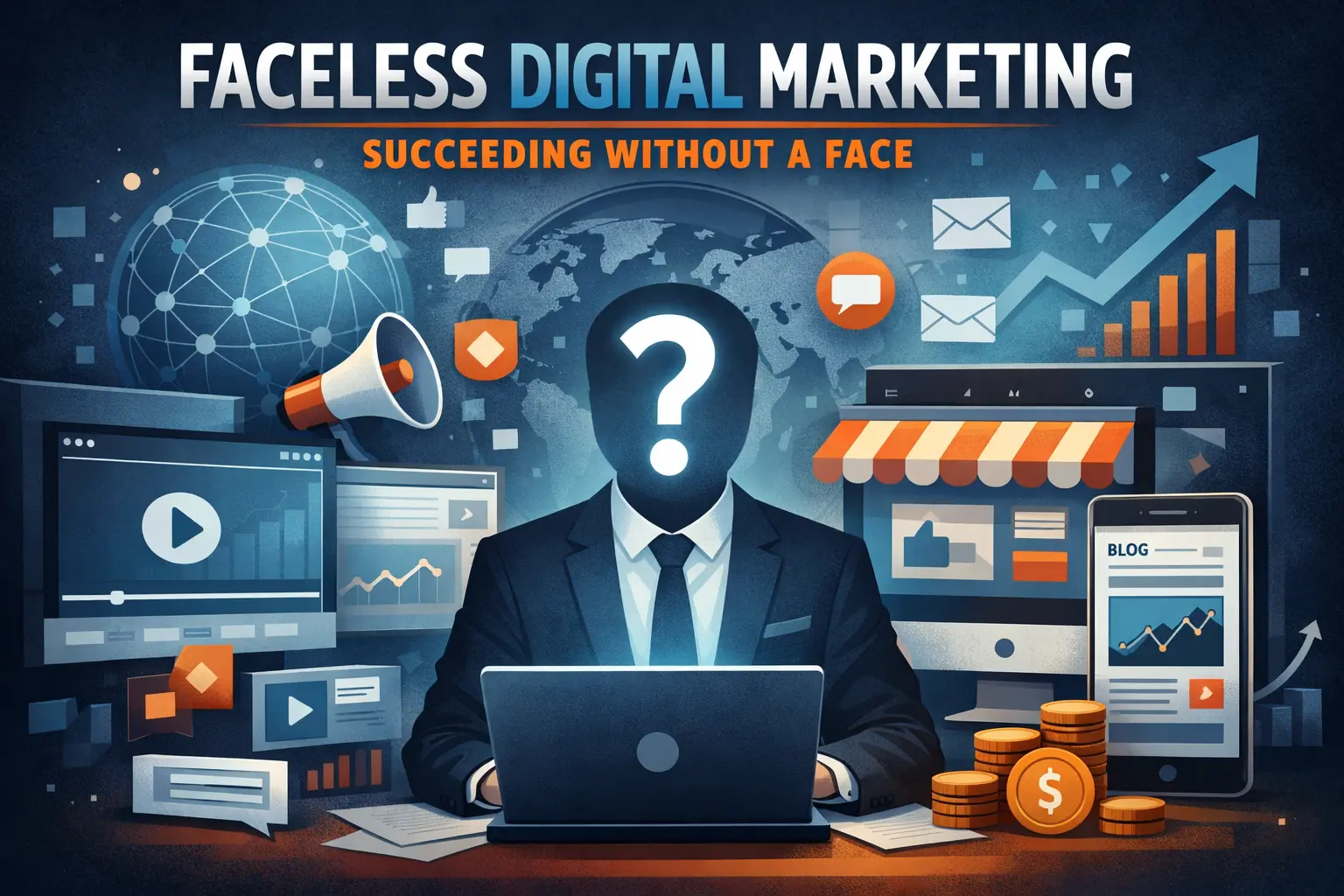
Faceless digital marketing is quietly revolutionizing the way businesses grow online. It proves that you don’t necessarily need to be the face of your brand to build trust & revenue. Instead of relying on charisma, personality, or a ‘picture perfect’ image, these businesses focus on value, solid branding, and consistent content. For entrepreneurs who value their privacy or want to create a business that stands without them, this model is a game-changer.
This approach isn’t about hiding, though – it’s about shifting the focus from the person behind the brand to the brand itself. By removing the individual from the equation, businesses can scale faster, sell more easily, and have the stability that personality-driven businesses often lack.
Understanding The Faceless Digital Marketing Approach
At its core, faceless digital marketing is all about promoting products, services, or content without connecting a specific personal identity to the brand. The brand itself becomes the personality. Imagine The Michelin Guide, Red Bull, or influencer Instagram theme pages like “Millionaire Mentor”. You know the brand, you trust the content, but you probably couldn’t even put a name to the person updating the page.
That’s a pretty distinct difference from influencer marketing, where the audience follows a person – if that person stops posting, the business will struggle. With a faceless model, the audience follows the concept or solution. The business is the entity, separate from the owner.
The whole focus is on the end user. Since there’s no personality distracting the audience, the product or content has to be top-notch. It means marketers have to really hone in on solving problems & delivering informative, high-quality content. This isn’t about being the centre of attention – it’s about showing off a quality product.
Why Businesses Are Turning to Faceless Digital Marketing
There are several good reasons for the shift towards this model. One of the most obvious is that not everyone wants their face plastered all over the internet. Faceless digital marketing lets entrepreneurs build massive audiences while having a private life.
Scalability is another big factor. When a brand relies on one person, that person is a bottleneck. They can only do so much – film a certain number of videos or attend a certain number of meetings. A faceless brand, on the other hand, can be managed by a team of writers, editors, and designers who create content in line with the brand voice – without the founder ever needing to step into the spotlight.
Consistency and stability play a big role, too. A personal brand is a fragile thing, after all – it can burn out, get caught up in a scandal, or change in life circumstances. If the ‘face’ of the operation gets sick, the whole show just stops. But a faceless brand, on the other hand, is an asset that can be sold and will keep on going no matter what happens to the individual. And let’s be honest, it’s a lot harder to sell a business called ‘John Smith Marketing’ than it is to sell ‘The Marketing Daily’. The latter is a tried and trusted system, whereas the former is very much a person.
How Faceless Digital Marketing Actually Works – On The Ground
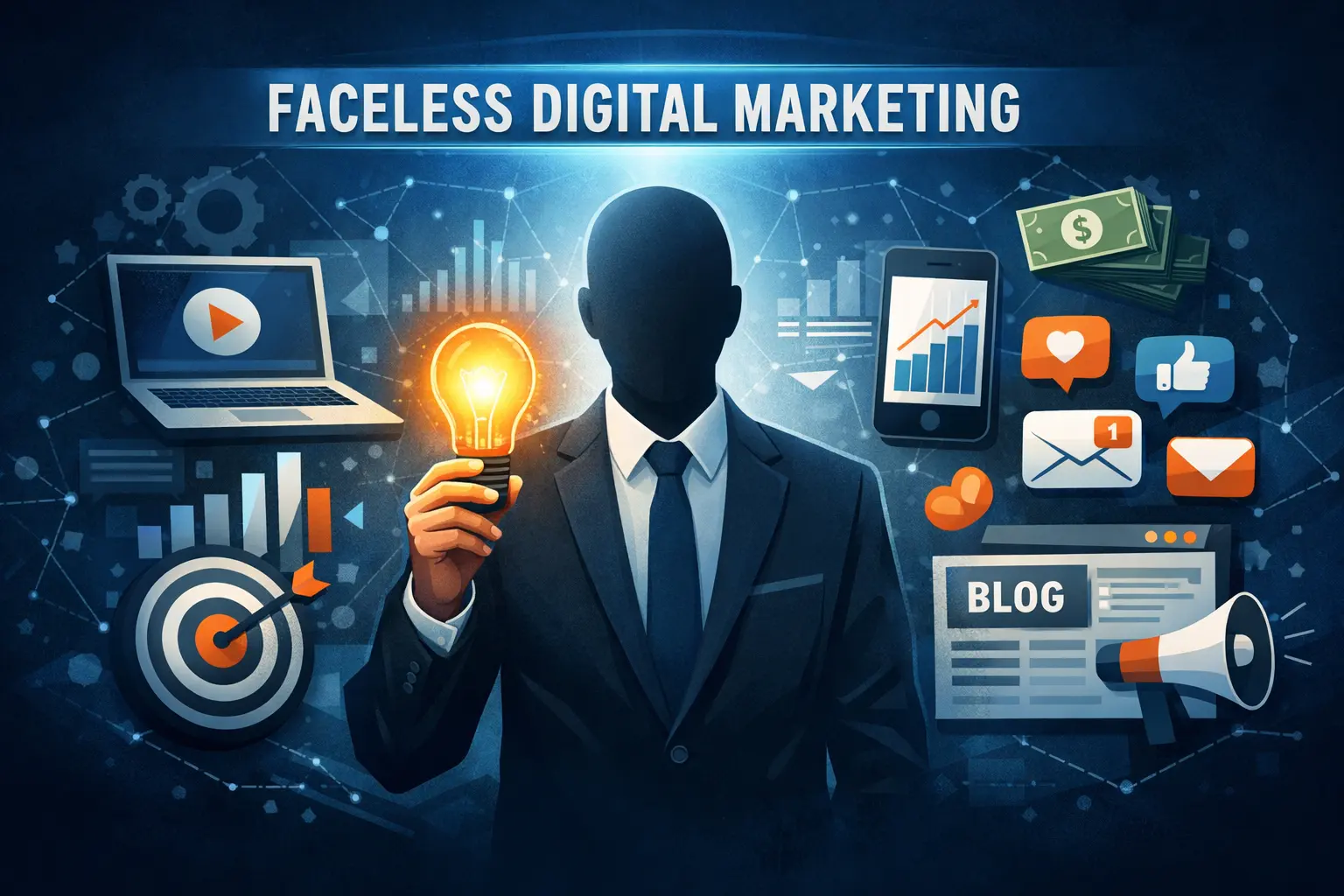
Building a faceless business is a pretty systematic process. It starts with deciding on a niche – since you can’t rely on your own personality to grab people’s attention, you need to choose a topic that’s got real demand and clear ways to make money out of it. That could be anything from writing software reviews to sharing finance tips or showing people how to decorate their homes.
Once you’ve chosen the niche, you then move on to the content creation stage. This is where you create all the value – and that means the good stuff that people want to look at, read, or listen to. So you might be making infographics, videos, well researched blog posts, or – you know – a list of the best this, that, or the other.
Once the content is created, you then think about how to get it out there. And the real trick to a faceless business is to understand how those online platforms work – i.e., how to get your stuff to the right people using the right keywords, hashtags, and engagement strategies. If you do this right, you can get all that content funnelled towards a sales page – and start raking in that revenue.
The Platforms That Faceless Digital Marketers Actually Use
The good news is that a lot of these platforms are really familiar to just about everybody nowadays. The not-so-good news is that most of them require a bit of a rethink from the usual marketing strategy.
Blogs, for example, are still one of the strongest ways to do it. And it’s not that hard to write something really valuable that solves people’s problems, without having to be some celebrity. People care about the stuff you’re saying, not what you look like.
You also get theme pages on places like Instagram and TikTok that can be really, really popular. These are just accounts that curate all sorts of stuff in a particular niche – so a page all about minimalist living might collect all sorts of tips and photos and create a community around that aesthetic rather than focusing on the person who runs the page.
Automated video channels are another thing to consider. You can create some really effective documentaries or list pieces using nothing more than some stock footage, animations, and a voiceover. The key to it is to make sure it all flows together in a coherent way.
And then there’s, of course, email marketing. Once you’ve got a user on your list, you can talk directly to them about all sorts of stuff, not least about products or services you’re offering and which might just solve their problems.
Telling A Story Without A Personal Brand
Now lots of people will tell you that without a face, you can’t do storytelling. But that just isn’t true. Faceless digital marketers do a lot of storytelling all day, every day. The thing is, though, that the star of the story is not the person telling the story. It’s the customer.
So the content strategy will often be all about educating people, or inspiring them, or curating some interesting and relevant stuff for them to look at. Educational content is a big one – just imagine consistently producing some really accurate and helpful tutorials that solve people’s problems. That’s a great way to build trust. Inspirational content can also work really well, especially in the lifestyle niches, using all sorts of imagery and audio to try to evoke some emotion.
Visual Identity becomes critical when a brand has no face to put a name to. You’ve got to make sure your logo, colour palette & font choices are all consistent so when a user scrolls past a post they just know it’s from you. Trust is built by repetition – the more your design style looks the same, the more reliable your info looks.
Monetization Models in Faceless Digital Marketing
Revenue is the goal of any marketing effort – & faceless brands have a few decent ways to make it happen.
Affiliate marketing’s usually the place to start. By recommending tools, software, or products that fit your niche, you earn a commission. People trust the brand’s curation, so they’re likely to click through.
Display ads work pretty well on high-traffic blogs or YouTube channels. Once you’ve got an audience big enough, ad revenue gives you a steady income.
Digital products can be gold. Once you create ’em, you can sell the same content over & over again. Think of ebooks, templates, presets, or courses that fit your niche. A faceless productivity brand might sell a digital planner.
Lead generation’s another option – collect customers’ details & sell ’em to other businesses. For instance, a site about home renovation could collect leads for local contractors.
The Role of SEO in Faceless Digital Marketing
SEO is the backbone of the faceless business model. Without a social media ‘influencer’ personality to bring in traffic, you need to rely on search engines to drive people to your site.
Building topical authority is key. If you write loads of great content (50 articles on indoor gardening, for example), you show search engines you’re an expert. This helps your content rank higher.
SEO’s a long-term play. A social media post might be forgotten in 24 hours, but a well-optimised blog post can bring in traffic for years. For faceless brands, that’s a game-changer – it means the business can grow without you slaving away at new content every day.
Challenges and Limitations
Now I’m not gonna lie… this model’s not easy. Faceless digital marketing comes with a load of hurdles.
Competition is insane – just because it’s easier to get started (you don’t need to be camera-ready, after all) means loads of other people are trying it too. To stand out, you need content that’s actually worth reading, & a brand that really stands out.
Trust takes longer to build. Humans are hard-wired to trust other humans – so when you take the face out of it, you’ve got to work twice as hard to prove you’re legit. You’ve got to be transparent, provide loads of value, & engage with your community to build that trust.
Originality can be a problem, too. It’s easy to fall into the trap of just curating other people’s content – instead of actually creating something new. To last in the long term, faceless brands need to start producing original insights or data.
Getting Started the Right Way
Want to build a brand that doesn’t have a face? Start by selecting just one platform and a niche that really speaks to you. Don’t feel like you have to be on every social media site straight off the bat – you’ll end up spreading yourself too thin and probably not doing a great job on any of them. That’s the key – validation. Check to see if other people are making money in that niche because let’s face it, if others are succeeding its a pretty good sign that there is a market.
Think about how you are going to create content. If you are pushing a blog, set up some consistent post templates so you don’t have to start from scratch every single time. If you are stuck on Instagram, create a bunch of graphics at once so you don’t have to spend all your time deciding on a new image every hour. The thing is, is that being consistent is the only way to beat those crazy algorithms.
Building an email list from the very start is a priority. Social media sites can just ban your account in an instant, and the algorithm can change overnight. But an email list is something that you own – it’s yours, lock, stock, and barrel.
And finally, take your time and scale up gradually. Once one platform is running smoothly, then you can put your profits back into better tools, a few freelancers, or maybe even expanding into another platform.
Final thoughts
Faceless online marketing is not some loophole or quick way to get rich. It’s a real business model that says assets are way more valuable than attention. It lets entrepreneurs build solid, scalable businesses that still let them keep their heads down if they want to. By focusing on solving problems and delivering good value over and over and over, you can build a brand that is just totally on its own two feet. Whether you’re just looking for something to do on the side or you’re going all in on a full-on enterprise, this faceless model shows that it is still possible to be super successful without being in the spotlight.