The medical world moves fast. Only a few years back, the only way to grow a practice was through good old word-of-mouth. Nowadays, patients do a Google search before ever picking up the phone. They scour the internet for symptoms, read what others have to say about your practice, and check that your website is legit before they even consider calling.
If your practice isn’t visible in the places where they’re looking, you’re losing out to competitors who have a handle on things.
Digital marketing for doctors isn’t just about slapping up a website and hoping for miracles. To be effective, it needs a strategy that builds trust, gets you noticed, and connects with your patients on a real human level. Whether you’re flying solo or running a large clinic, how you present yourself online says a lot about your reputation.
In this guide, we’re going to break down 13 practical tips to give your marketing approach a 2026 makeover.
Getting to Grips with Digital Marketing for Doctors
Medical marketing is in a league of its own. You’re not trying to shift a gadget; you’re offering expertise, care, and a service that could literally change people’s lives. That means your approach is all about putting patient trust first and leaving those dodgy sales tricks behind.
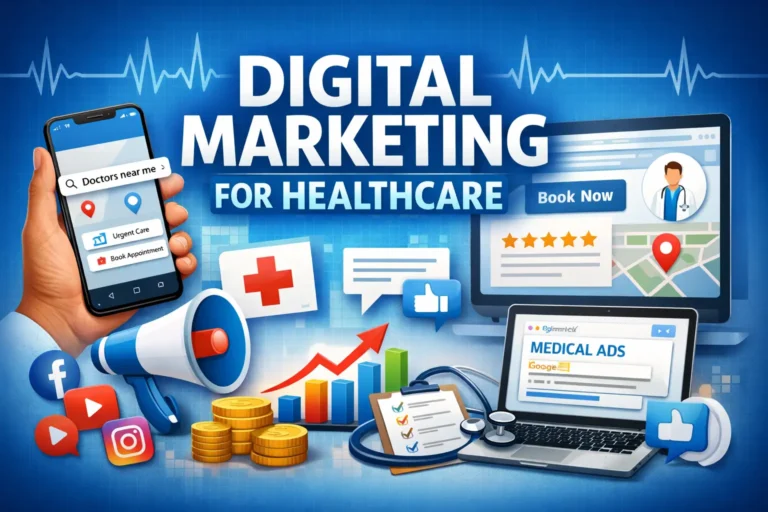
Digital marketing for doctors encompasses everything from search engine optimisation (SEO) to making sure your social media presence is on point and managing your online reputation. It’s all about creating a seamless path for a patient to find you, trust you, and book an appointment. Your goal shouldn’t just be about driving traffic through the door – it’s about connecting with people who genuinely need your help.
2. Building a Website That’s Worth Visiting
Your website is like your digital waiting room. If it’s slow, confusing, or just plain outdated, patients will click off and look elsewhere before even seeing your name.
A strong medical website needs to be mobile-friendly – most health searches get done on a phone after all. It should clearly list your services, what insurance you accept, and your doctor’s profiles. And crucially, it’s got to have an easy way for patients to book an appointment. Trust signals like certifications, easy contact info, and patient testimonials are non-negotiable.
If you need some help building a website that gets results, you can check out our web development service page.
3. Local SEO for Doctors and Their Clinics
Most patients want to see a doctor who’s local – that’s where Local SEO comes in. If you haven’t already, go and claim your Google Business Profile. It’s often the first thing patients see in search results.
Make sure your Name, Address, and Phone Number (NAP) are consistent across the web. Use local keywords like “pediatrician in [City Name]” or “dermatologist near me” on your site. The more you’ve got your local presence sorted, the more likely you are to show up in that “Local Pack” (the map section of Google search).

4. Content Marketing That Actually Helps Patients
Patients are looking for answers – and by providing them, you can establish yourself as an authority in your field.
Write blog posts that answer the kinds of questions patients are asking about. Create pages for specific conditions you treat. Offer downloadable guides for people who’ve just had treatment. The content you create doesn’t just help with your SEO – it also builds confidence. When a patient feels informed by your content, they’re more likely to put their trust in you with their care.
5. Social Media Marketing for Doctors
Social media is an incredibly powerful tool for showing the human side of your practice – it lets you share some real health tips, keep patients in the loop with clinic updates, and behind-the-scenes peeks at your team.
Focus on the platforms where your patients are hanging out – Instagram is a good bet for visual specialties like dermatology or dentistry because it’s primarily photo based, while LinkedIn is better for B2B connections (that’s business-to-business). Just remember to always keep your patients’ privacy top of mind – HIPAA compliance is a big deal here. Never post a patient’s photo without them giving you their explicit okay to do so. And keep it all pretty professional, helpful, and engaging.
6. Paid Advertising for Medical Practices
Sometimes organic reach just isn’t enough – that’s where paid advertising comes in, like Google Ads, which puts you right at the top of the search results almost instantly.
This is really effective for high-value services or emergency care needs – you can target specific keywords so your ad appears only when someone is searching for exactly what you offer. It’s worth keeping in mind, though, that there are strict regulations around advertising in healthcare – Google has a number of rules around what you can and can’t promise in your ads.
7. Online Reputation and Reviews Management
A few bad reviews can do a lot of damage to a reputation you spent years building. Online reputation management for doctors relies pretty heavily on ‘social proof’ – so that’s why it’s a good idea to encourage patients to leave reviews on Google and Healthgrades.
Try to make it a part of your post-appointment routine – after a patient leaves, send them a message saying ‘we’d love to hear from you’. When you get feedback, respond to it professionally – thank patients for positive reviews and when you get a negative review, address it with empathy and let them know you’re willing to resolve the issue quietly.
8. Email Marketing for Patient Retention
Attracting new patients is important, but keeping them is a lot cheaper. Email marketing is the way to stay in touch without being too pushy.
You can send out monthly newsletters with some health tips, seasonal reminders (like ‘don’t forget to get your flu shot’), or some updates about the clinic. You can also use those automated emails to remind patients when their appointment is coming up or suggest they come in for a follow up visit. Keeps your practice top of mind without being too annoying.
9. Video Marketing for Doctors
Video is way more effective than text for building trust. When patients see your face and hear your voice, it makes them feel a lot more comfortable before they even get in the door.
You don’t need to hire a Hollywood crew to make your videos – short, clear videos that answer some common questions or introduce your staff can be really effective. Even a video tour of your office can help reduce anxiety for new patients. Just make sure to embed them on your website and share them on social media so you can get the most out of them.
10. Compliance and Ethics in Digital Marketing for Doctors
As a medical professional, you’ve got a higher bar to set for yourself – your marketing has to comply with all the HIPAA rules around patient privacy.
When it comes to what you say in your marketing materials, be careful with your claims – don’t promise cures when they’re not guaranteed and never promise results that aren’t typical. Make sure your website includes all the necessary medical disclaimers – it’s a lot easier to stay compliant and avoid any problems down the line, and it’s going to build trust with your community in the long run.
11. Getting the Most Out of Your Digital Marketing
You can’t make progress if you don’t know where you stand – so measuring your results is absolutely key to getting any kind of traction with digital marketing for doctors. And let’s be real, effective digital marketing means keeping track of your data.
Use Google Analytics to see where your website visitors are actually coming from – and track whether phone calls and bookings are coming from your online ads, or whether people are finding you organically. This kind of data is crucial – it lets you know what’s working for you and where you’re likely throwing money out the window. And that means you can start to make some adjustments to get a better return on your investment.
12. Common Digital Marketing Mistakes to Watch Out For
Unfortunately, lots of practices are just throwing money at digital marketing strategies that don’t actually deliver – and one of the most common mistakes is simply ignoring local SEO and sticking to broad terms. Another is building a website that looks the part but is basically impossible to navigate.
Whatever you do, don’t go out and buy email lists or low-quality leads – they’re unlikely to convert and could end up damaging your reputation. And please – don’t neglect your patient reviews. Ignoring (or just sweeping under the carpet) critical feedback from patients basically tells potential patients that you just don’t care about their experience.
13. Building a Digital Marketing Strategy That Works for Your Practice
Every practice is different, so a plastic surgeon is going to need a very different online strategy than a general practitioner. A general practitioner is going to need all the local visibility she can get, while a surgeon is going to need a more visually driven approach.
When you’re starting out, take a look at your budget, what your local competition is up to, and what your growth goals are. You might start with a website revamp and some local SEO – then add in paid advertising as you grow. Or, if you’re still a bit lost, you can just start by learning more about how we help businesses grow.
Conclusion
Digital marketing for doctors isn’t some nice-to-have anymore – it’s essential if you want to survive in a competitive healthcare landscape. By building a professional online presence, being honest with your patients, and tracking your results, you can actually start to grow your practice sustainably. First step? Just get the basics right, priorities building patient trust – and then scale up as you see results start to roll in.