Agencies are often faced with a difficult decision. Your clients love the work you do and want you to take on even more of their business. They ask you to handle SEO, PPC, content, or web design & you’re left in a tight spot. If you say no, you leave money on the table and risk losing them to another agency that can do it all. But if you say yes, you have to scramble to find new staff or learn complex skills on the fly – often with little time to spare.
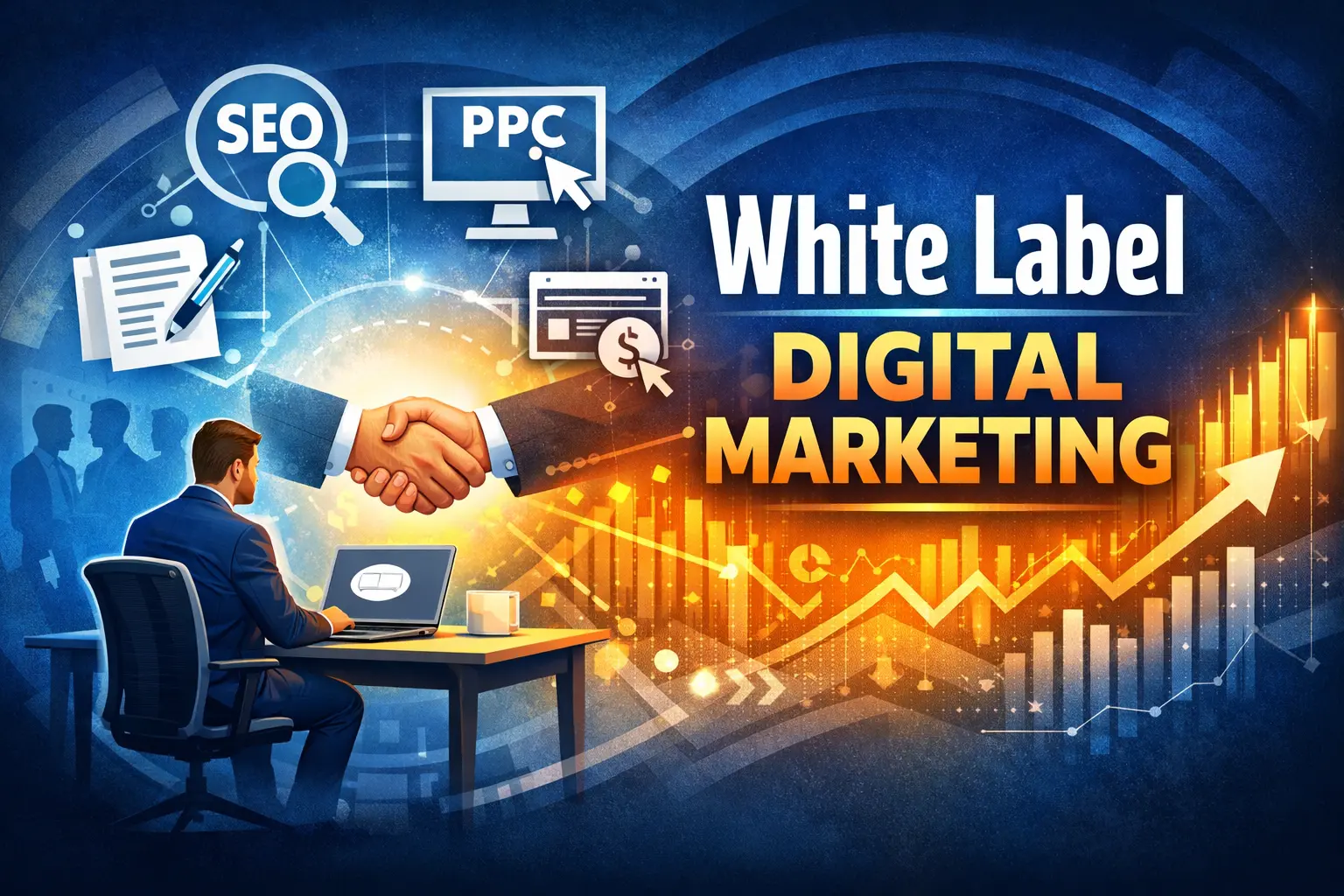
But there’s another way around this. White label digital marketing lets you offer your clients a whole new range of services right away, without the operational headaches that come with it. You get to scale your agency and boost revenue while letting a partner team handle the hard stuff in the background.
What is White Label Digital Marketing – Really?
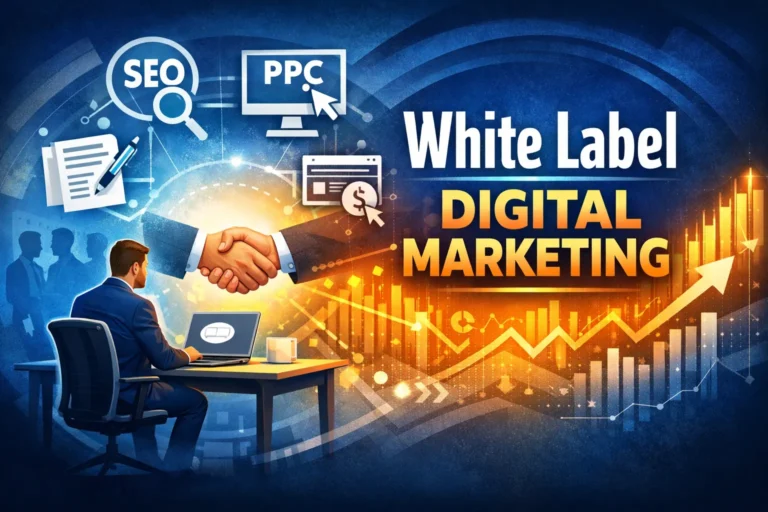
This is a straightforward concept that packs a punch in the real world. White label services are essentially products or work created by one company that another company then rebrands & sells as their own.
In the world of digital agencies, it works like this. You partner with a specialized firm to do the client work, so they handle the SEO audits, write the blog posts, or manage the ad campaigns. But instead of telling the client that you hired someone else, you just present the results to them under your agency’s name.
This is a step up from standard outsourcing. Outsourcing means handing off a task to a freelancer and hoping for the best. With a true white label partnership, though, you get a dedicated team that understands your agency standards & works like an extension of your business. The client will never even know that a third party was involved.
Why Agencies Are Turning to White Label Digital Marketing
There’s a lot of pressure on agencies to be “full-service” these days. Clients like dealing with one vendor for all their marketing needs, and agencies have to meet this demand – or risk losing business to someone who does. That’s where the white label model comes in – it lets you meet this demand without the risks.
Scalability is the main reason agencies are turning to white label partnerships. Hiring full-time staff is expensive & takes a while. You have to pay salaries, benefits & taxes, whatever your cash flow is like. With a white label partnership, though, you can scale up or down at the drop of a hat – based on your current workload.
Speed is another key factor. You can launch a new service department tomorrow if a client asks for it. If they need technical SEO and you don’t have someone in-house to do it, a white label partner can step in and fill that gap overnight.
Focus is the ultimate benefit of white label digital marketing, though. When you’re not bogged down in the nitty-gritty of every single campaign, you can focus on the things that actually add value – strategy, sales & looking after client relationships.
Core Services You Can Get From a White Label Partner
Just about any digital service can be white labeled, but most agencies tend to outsource the most time-consuming or technical tasks.
SEO & Link Building
Search engine optimization is all about consistent effort & having the right technical knowledge. A partner can handle on-page fixes, technical audits & off-page strategies. For example, they might come up with a campaign that requires guest posts to boost rankings, or Mix SEO Backlinks to create a diverse and natural link profile.
PPC & Paid Ads
Managing Google Ads or Facebook campaigns is a day-to-day job that requires constant monitoring. A white label expert can take care of the bidding, copywriting & optimization while you take the credit for the ROI.
Content Writing
High-quality blogs and articles are what drive traffic to your site, but they take an eternity to write. White label teams, on the other hand, produce SEO-optimized content with ease, at a rate that will blow your mind.
Web Design and Development
A lot of marketing agencies are put off by having to manage servers or write code themselves. So they partner with someone to build the sites, and then pass the keys on to the client.
How the White Label Workflow Actually Operates
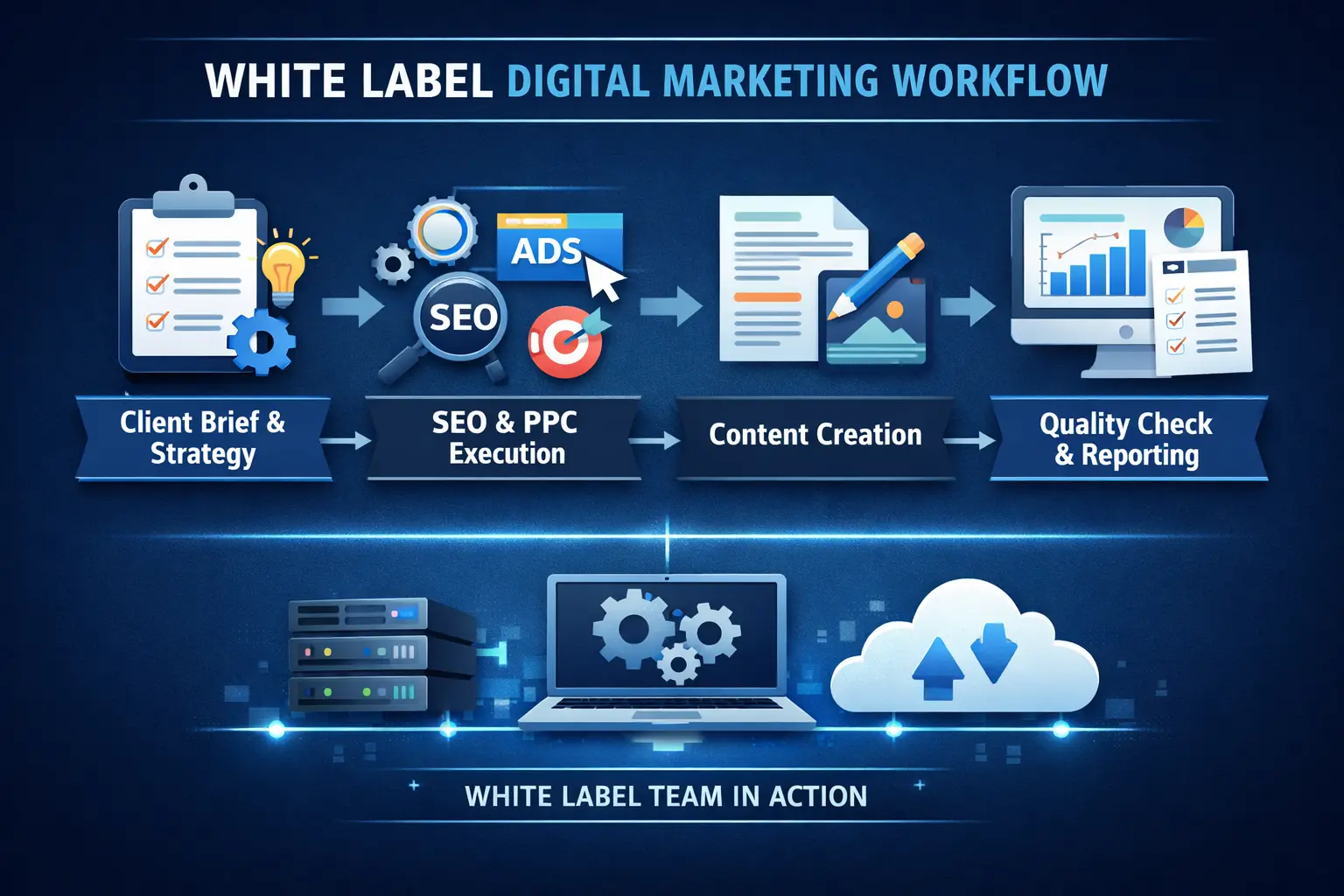
Having a smooth workflow in place is the key to success. Most of the time, it will follow a fairly standard path.
- Client Acquisition 101: You sell the service to your client and set the price that works for you.
- Briefing the Partner: You collect all the details from the client and then pass a really detailed brief to your white label partner.
- Getting Down to Work: The partner then performs the work – this could be writing ad copy, building links, or designing a landing page; whatever the client needs.
- Quality Check: Then you get to review the work, to make sure that it meets your agency’s standards – and that’s a must.
- Reporting Time: The partner provides a full report without any branding on it. You then add your agency’s logo to it and send it off to the client.
The goal is to make the experience as seamless as possible, so that the client is convinced that all the work is actually coming from your in-house team.
White Label Digital Marketing vs Working In-House
Deciding whether to hire someone or to partner with a white label agency is all about weighing up the numbers.
Cost Differences
Working with an in-house team means fixed costs for you – you have to pay them even when business is slow or non-existent. But with a white label service, costs are variable – you only pay when you have a live client project, which helps protect your margins.
Expertise Depth
Hiring in-house means you’re likely to get a generalist who knows a little bit about everything. But a white label digital marketing agency is made up of specialists who do one thing all day, every day. So you get access to really deep expertise without breaking the bank on a senior specialist salary.
Management Overhead
Managing people takes up a lot of your time – staff need HR, training, and performance reviews. But with a white label partner, you just manage the deliverable – not the person themselves.
Common Misconceptions About White Labeling
Some agency owners get cold feet about outsourcing because they’ve got some misconceptions about the process.
“People will think the quality will be rubbish.”
This is only true if you go for the cheapest white label agency you can find. Any decent provider – and you want a decent one – is going to deliver high-quality work because they rely on you giving them repeat business.
“I’ll lose control of the project.”
But you’re actually still the project manager. You set the strategy, you approve the assets, you’re never out of the loop if you set the right communication protocols from the start.
“My clients will find out about the partnership.”
If you choose a reputable white label agency, they’ll sign a Non-Disclosure Agreement (NDA) for you. They’ll also have strict protocols in place to make sure they never contact your clients directly.
Choosing the Right White Label Partner
Not all white label partners are created equal. You need to do your research and pick one that’s a good fit for you.
Look for proven results: get them to show you case studies or examples of past work. If they’re doing SEO, ask to see the ranking improvements they’ve achieved for other clients.
Make sure you get good communication from them. If they take three days to get back to you about an email, they’ll cause you to miss client deadlines. So test their responsiveness before signing a contract.
And make sure they can offer you white label reporting. Essentially, this means they’ve got systems in place to generate reports that can easily be rebranded as your own agency.
Pricing Models in White Label Digital Marketing
Working out how to price these services is a real key to making a profit.
Per-Project Pricing
This usually works well for web design or the occasional audit. You get a fixed quote, then it’s a pretty straightforward mark-up – 50% to 100% if you like – before you quote to your client.
Monthly Retainers
This is a good option for SEO or PPC work. The partner pays you a flat monthly fee to manage the campaign – you then charge your client a higher monthly retainer, and the difference is how you make your money.
Tiered Packages
A lot of providers split their packages into Silver, Gold, or Platinum levels. This helps make it easy to sell standardized options to your clients without having to get out the calculator every time they ask.
How White Label Helps Agencies Grow Faster
You can really feel the difference in terms of growth rate. Agencies that use white label digital marketing see their average client value shoot up significantly.
Instead of selling a $1,000 monthly SEO package, you can sell a $3,000 package that wraps in all sorts of extras like SEO, content, and paid ads. You capture a lot more of the client’s budget, without having to take on even more work.
It also helps reduce client churn. When you can solve all sorts of problems for them, they’re much less likely to fire you just because their social media numbers dipped a bit. If you handle the whole of their digital presence, you become an indispensable partner – they can’t easily replace you.
Who Should Use These Services?
This model isn’t just for the big boys and girls.
Solo Consultants: You can make out that you’re a full agency – you do the strategy, and the partner does the legwork.
Web Design Agencies: No more turning away clients who need marketing help after they’ve got their site up and running.
Small Agencies: You can compete with the bigger firms by offering all the services that you otherwise wouldn’t be able to afford to hire permanent staff for.
Long-Term Strategy With White Label Digital Marketing
Using a white label partner can either be a permanent thing or a stepping stone on the way to building up your in-house team. Some agencies use it as a way to build up a revenue stream until they can afford to hire an in-house team leader – others prefer to stay lean and keep their overhead low.
Ultimately, white label digital marketing gives you the flexibility to say ‘yes’ to any growth opportunity that comes your way. It removes the operational bottlenecks and lets you build the agency you want, at the speed you want.