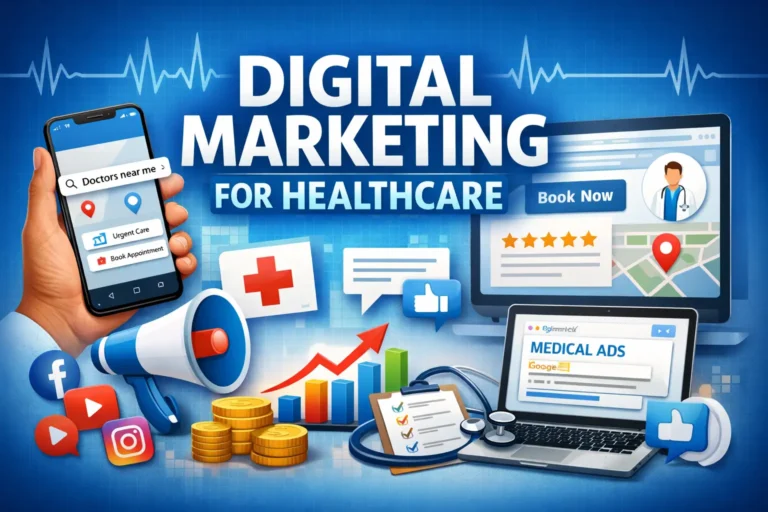
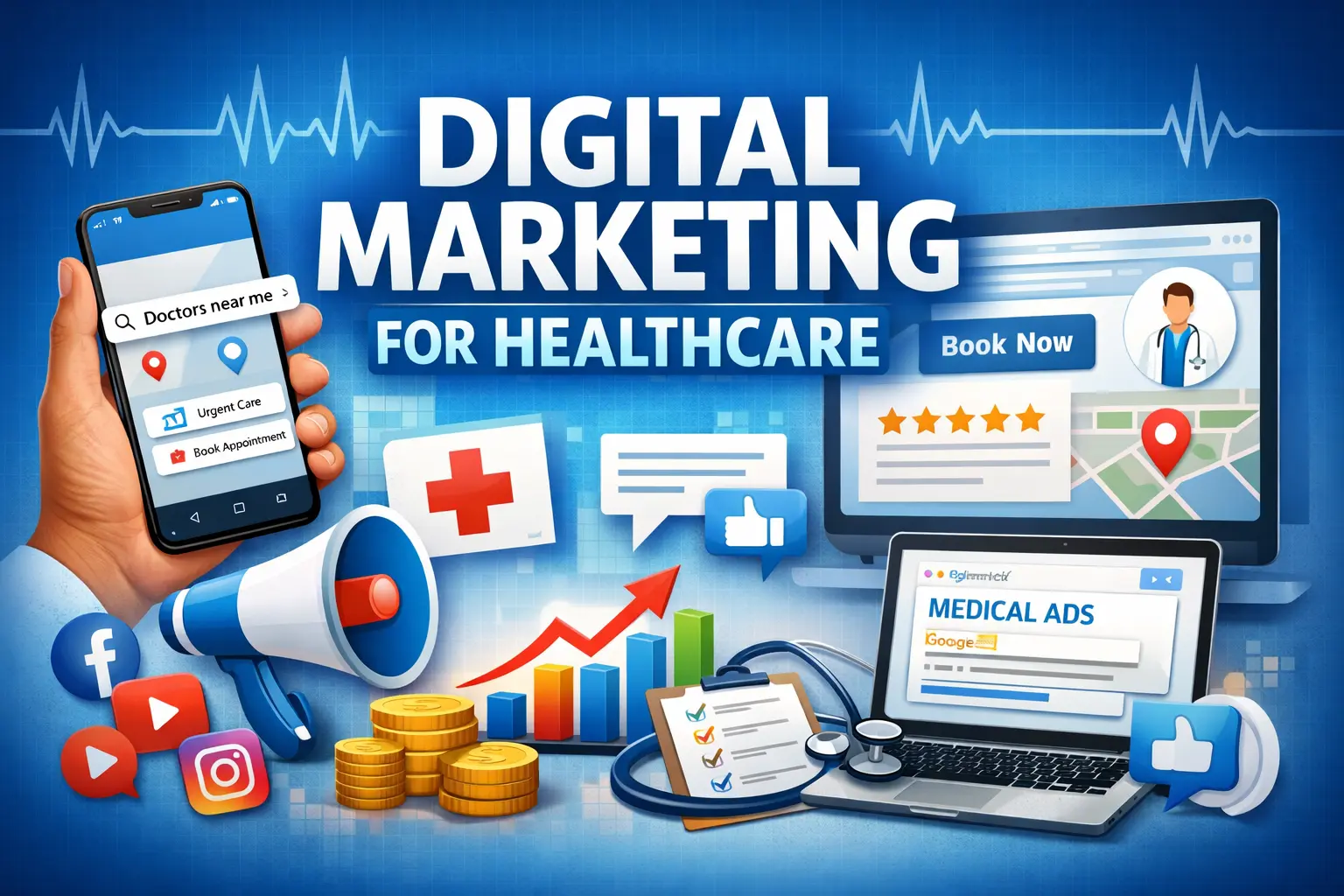
Patient behavior has changed. We’re not talking about flicking through phone books anymore when we’re feeling unwell – we’re reaching for our smartphones straight away. This shift means that digital marketing for healthcare is no longer a choice for medical providers – it’s an absolute necessity. If your clinic or hospital isn’t visible online, you might as well be invisible to the modern patient. This guide breaks down the practical strategies you need to actually reach the people who need your help.
1. Working Out How Patients Search for Healthcare Services
Patients don’t go looking for a specific brand name unless they already know and love your practice. They typically type in symptoms or “near me” terms. To get digital marketing for healthcare right, you first need to understand what that intent looks like. Someone searching for “urgent care for a broken bone” is in a very different headspace than someone looking for “calcium supplements”. Your strategy needs to prioritize those high-intent searches so you can catch patients when they’re actually looking to book a visit.
2. Building a Healthcare Website That Actually Converts Visitors into Patients
Your website is basically your digital waiting room. If it’s slow, confusing, or just plain outdated, patients will be gone before you even know they were there. You need a website that’s fast, mobile-friendly, and looks professional. Investing in solid Graphics Design will make sure your medical practice looks like a trustworthy and established business from the very first click. Clear buttons for booking appointments are an absolute must have.
3. Local SEO for Doctors – The Bit That Gets You On The Map
Most medical needs are local, so you want to show up when someone in your area is searching for a doctor. This means having a strong Google Business Profile. Make sure your name, address, and phone number are all consistent across the web. Local SEO is basically the foundation of digital marketing for healthcare because it puts your practice literally on the map. Include some nice photos of your clinic and make sure your hours are bang up to date. This will help build up trust with searchers straight away.
4. Content That Educates Without Scaring The Patient Off
Medical jargon can be a real turn off for patients. Your content needs to answer questions in plain English. Blog posts about common conditions or FAQs about what to expect during a visit can really reduce anxiety. This approach positions you as an authority in your field and brings people to your site before they’re even ready to book a visit. This is a vital part of digital marketing for healthcare because it helps you get in front of people when they’re in the market for medical care.
5. Why Google Cares About Who’s Giving Medical Advice
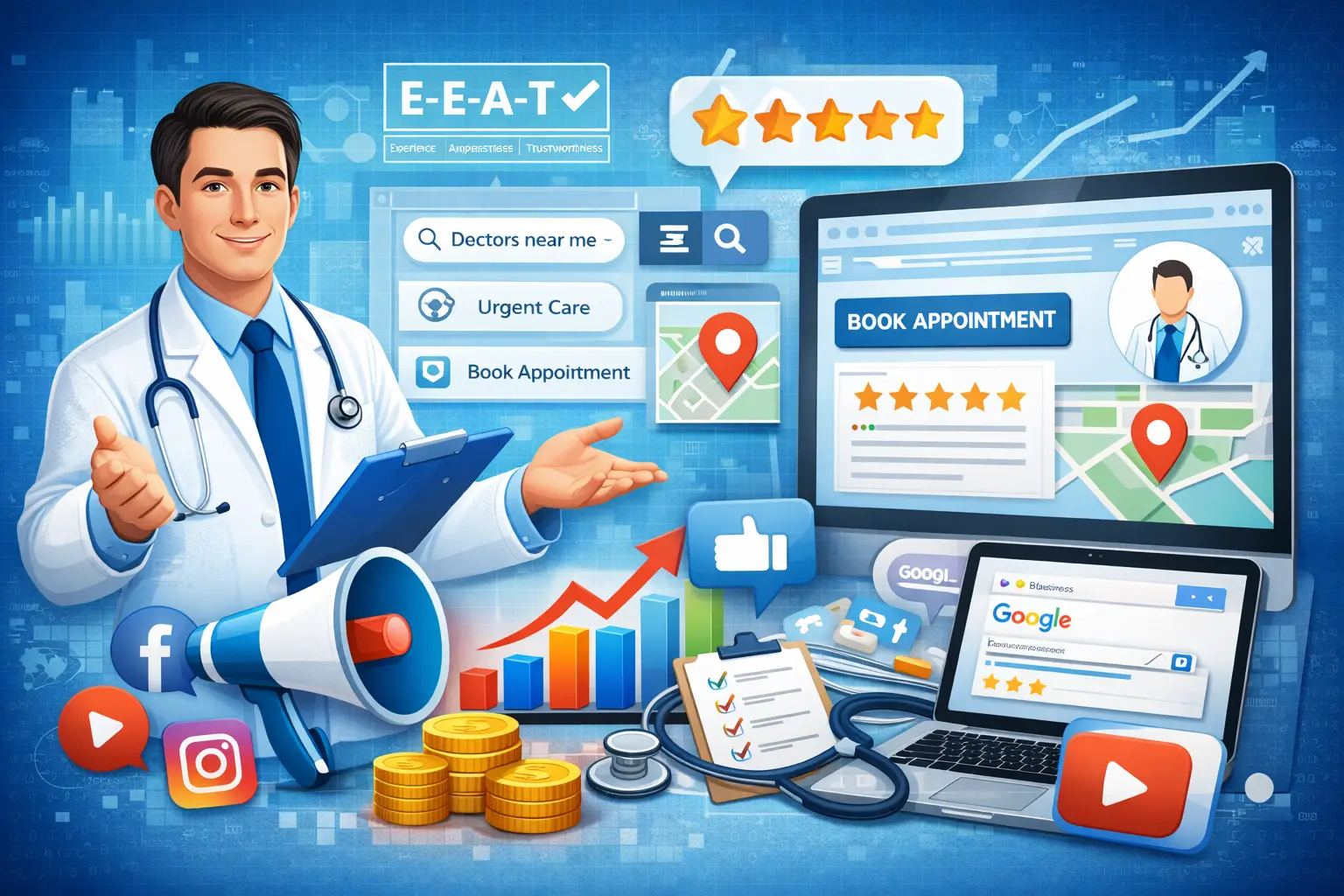
Google cares a lot about who is giving medical advice. They look at things like Experience, Expertise, Authoritativeness, and Trustworthiness (E-E-A-T). You need to showcase your doctor’s credentials and medical certifications on your website. Building up authority also means taking some basic technical SEO steps. Some marketers even use things like PBN Backlinks to increase the authority of their domain in competitive niches – but when it comes to medical brands, high quality content always needs to come first.
6. Paid Google Ads for Immediate Patient Acquisition
SEO can take ages, but online ads are instant. Google Ads allow you to come top of the search results for specific treatments – and that’s one of the quickest ways to see a return on your investment in digital marketing for healthcare. You can target search terms like “emergency dentist” or “pediatrician near me” to get in front of patients with an urgent need.
7. Social Media Marketing for Healthcare Brands
Social media lets you show the human side of your practice. Share staff photos, health tips, community news – and don’t just stop at posting. It’s about engaging with people, too. A regular social media presence reinforces all your other digital marketing for healthcare efforts by keeping your clinic top-of-mind. Just remember that patient privacy has to be your number one priority on these public platforms.
8. Video Marketing for Medical Practices
Video builds trust a lot faster than just text. Short videos introducing your doctors or explaining a tricky procedure can make patients feel more at ease. You don’t need a Hollywood budget either – a simple and honest video shot on your smartphone can be very effective. It helps prospective patients feel like they already know you before they walk through your doors.
9. Email Marketing for Patient Retention
Getting new patients in the door is tough, but keeping them should be a breeze. Email marketing lets you send appointment reminders and health tips – and it’s a cost-effective tool in digital marketing for healthcare that increases patient lifetime value. Sending out a monthly newsletter with health advice keeps you on people’s minds even if they’re not in need of medical care.
10. Reputation Management and Online Reviews
Word-of-mouth has gone digital – now patients read online reviews before choosing a provider. You gotta have a strategy for asking happy patients for feedback – and you should also be prepared with a plan for responding to negative reviews in a professional way. How you handle criticism online says as much about your care as all the good reviews do.
11. Keeping Your Marketing HIPAA-Compliant Practices
In the medical field, patient privacy is a non-negotiable. You can’t use patient names or photos without explicit written permission. Your digital marketing for healthcare strategy has to stick to HIPAA regulations to the letter. This applies to how you store email addresses and what you post on social media. Slip up, and you could damage your reputation and face some serious legal trouble.
12. Using Landing Pages for Specific Treatments (The Smart Way)
Don’t just send ad traffic to your homepage. If you’re advertising a specific service like “teeth whitening,” link to a page that’s all about that service. Landing pages are designed to do one thing: convert visitors into leads. They focus the patient’s attention, cut out distractions – and if you use them right, they can really improve your campaign’s performance.
13. Tracking Conversions and Patient Journeys – Better Not Guessing
You can’t make improvements without knowing what doesn’t work – so you have to measure the good, the bad, and the ugly. What ads are actually driving phone calls & which blog posts are leading to bookings? The key to truly succeeding with digital marketing for healthcare is to figure out which channels are actually raking it in for you. It’s not just about chucking money at things & hoping for the best.
14. Don’t Get This Far Wrong – Common Mistakes in Healthcare Digital Marketing
Lots of clinics go down the tubes because of trying to do too much all at once. They just spew out generic content or totally ignore their local listings. And then there’s the bigger mistake of not following up on leads right away. Avoid these rookie mistakes if you want to be a pro at digital marketing for healthcare. In the long run, consistency tends to beat out trying to do too much all at once.
15. Finding a Digital Marketing Partner Who Gets It – For the Busy Doc
You are a doctor, not a marketing expert. You’ve got patients to treat – so you probably don’t have the time to deal with SEO and ad management. So you need to find an agency that actually knows what they’re doing in the medical field. And they need to get the compliance thing right, too. Your ideal partner will see digital marketing for healthcare as a system for growth that you can build on, not just a laundry list of things to do.
A Healthier Practice – Marketing That Connects People
You know – doing marketing in the medical field’s a delicate balance between being strategic and showing some heart. It’s all about bringing the right people together with the right care providers. By putting these tactics to work, you’ll make sure your practice stays visible and accessible. And that consistent digital marketing for healthcare builds trust with your patients, leading to long-term growth.