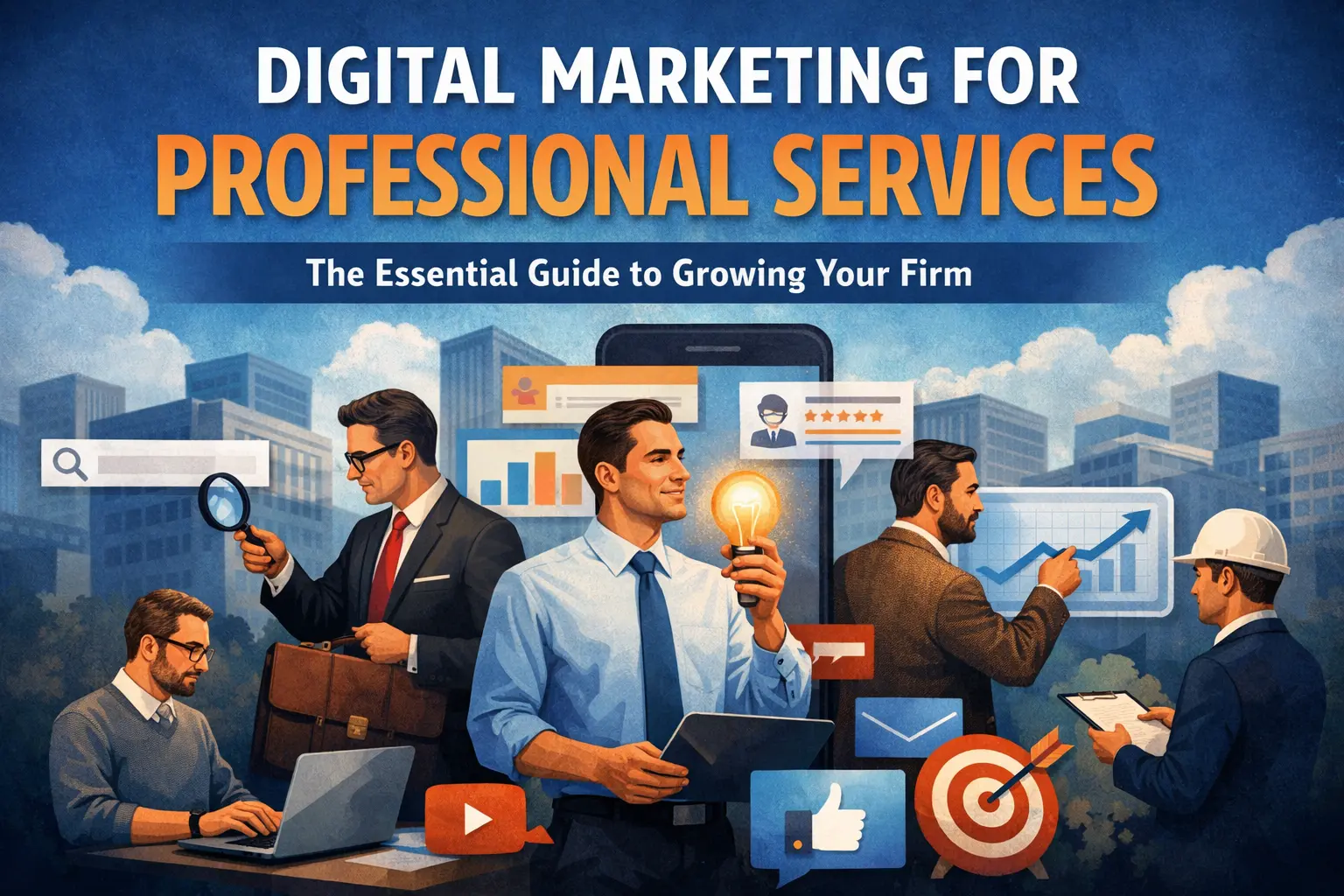
Deciding whether or not to hire a professional firm has not been one that has come easily for most clients. They don’t look at the ad and think, ‘Yes, okay, I will go and do it.’ There’s a good chance that they do research, weighing up all sorts of factors, and deliberating long and hard before actually coming to a definitive decision. And for them to actually sign on the dotted line, they’ll actually have to be made to feel as though you have a clear and exact understanding of what their issues are before they’ll even think about doing what you’re advocating. This guide is meant to show you how best to utilize digital marketing for creating this basic trust and growing your firm.
What Does Digital Marketing Really Mean for Professional Services
Digital marketing for professional services is essentially using online channels to build visibility, demonstrate your expertise, and generate leads for businesses that are about building long term relationships rather than just selling a product.
In industries like law, accounting, healthcare & engineering, the focus of your digital strategy has to be on education and establishing your authority rather than just shouting about what a great product you are selling. You’re selling intangible assets – the knowledge & expertise of your team, and the reputation of your firm. So, your digital strategy should be about showing what you can do, not just communicating your sales message.
Why Professional Service Firms Need to Get on Board with Digital Marketing
The supposedly “good old days” where one would primarily get a majority of their business via referrals and networking using “who do you know” are slowly but surely a thing of the past. Now, most potential clients are going to Google to do their due diligence before ever even calling. Sure, if you ever get a referral, then they will also want to check you out before calling.
Your first impression now comes on screen, not in a handshake. If your website looks like it’s been stuck in the dark ages or you don’t have much of an online footprint at all, you can kiss goodbye to any credibility. And with the competition out there already investing in digital visibility, you need to be keeping pace, or you’ll be left behind. Long sales cycles are par for the course in this sector, so if you’re not putting in the effort to maintain a consistent online presence, you’ll be lucky to even get on the radar of potential clients when they do decide to go shopping around.
Understanding the Professional Services Buyer Journey
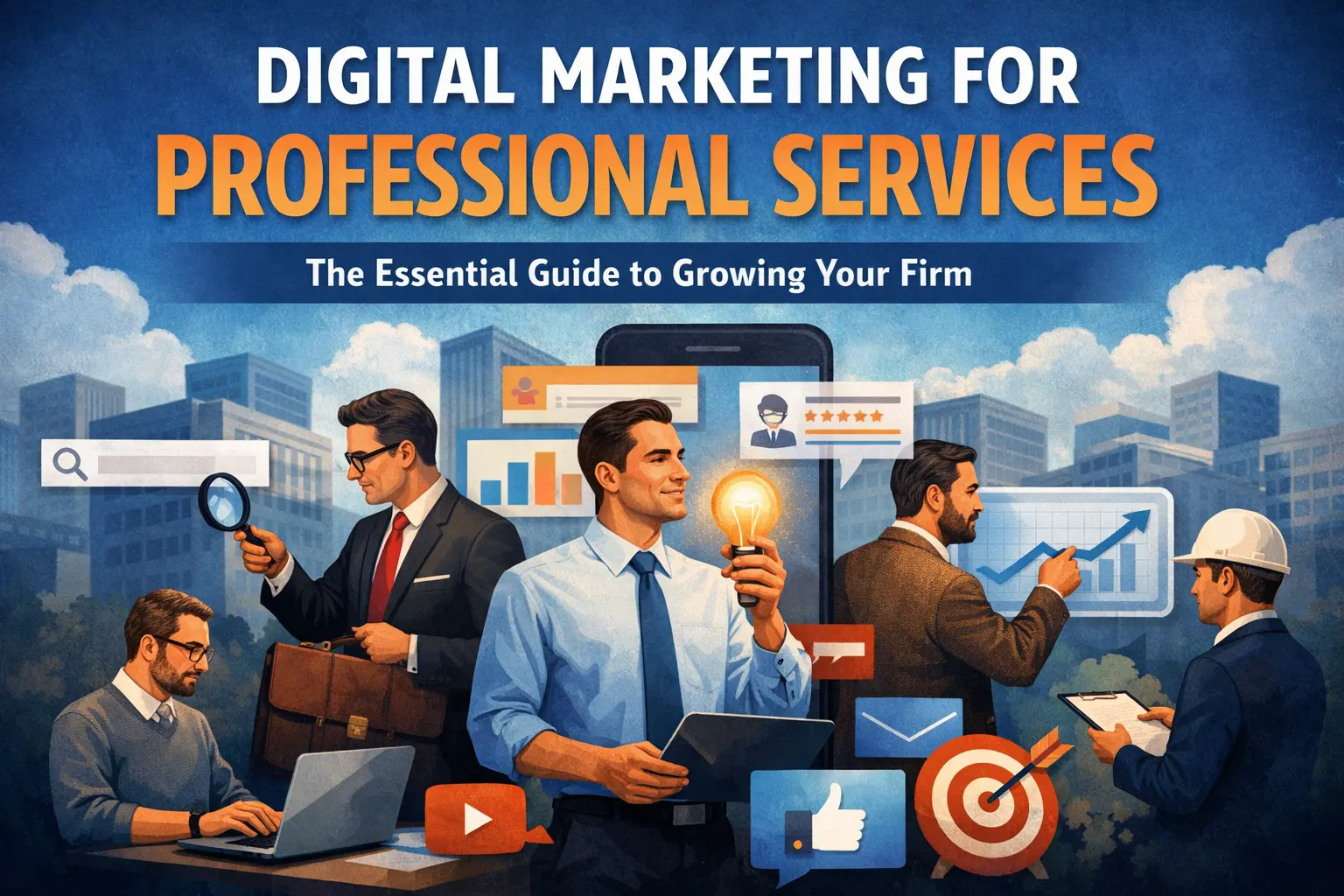
To even get close to succeeding at digital marketing for professional services, you need to understand how your clients are going to buy from you. The journey they take usually has three key stages:
- Getting Aware: The client realizes they’ve got a problem (e.g., a tax audit, a legal dispute, or an operational inefficiency).
- Doing Their Research: They start looking for solutions and checking out the competition. They read articles, check reviews, and look for proof that the provider they are looking at is the real deal.
- Making the Decision: They choose the provider they trust most to sort out their specific problem.
Digital touchpoints come into play at every stage. A well-timed blog post can help them get on the radar during the awareness phase, while a compelling case study can tip the scales in your favor during the decision phase.
What Digital Marketing Channels Actually Deliver
Effective digital marketing for professional services is often about mixing and matching a range of core channels – the ones that really deliver.
Search Engine Optimization (SEO)
SEO is about getting your firm to show up when people are searching for solutions. Ranking for service-based keywords and location-based terms is key, but so is creating authority content that sends a signal to the search engines that you are a genuine expert in your field.
Building Trust Through Content Marketing
Content is at the very heart of building trust. When you sit down to write a blog post that gives your clients the answers they’re looking for – the kind of answers that show you actually know what you’re talking about – you’re showing the world just what an expert you are, all without ever giving off that pushy sales vibe. Case studies are particularly effective at this because not only do they show you’ve solved similar problems for clients in the past, but they actually come with proof to back it up.
Turning Your Website into a Lead Magnet
Your own website needs to be about much more than simply introducing you to the digital landscape; essentially, however, your own website needs to tell someone sufficiently intrigued about you exactly what you are doing, and exactly whom you are able to work with. Again, this isn’t simply about presenting your service offerings; rather, this is about being focused on the problems that can be addressed and the solutions that can be achieved. Don’t forget to weave some trust indicators, as those are essential, of course!
Getting Real Value from Email Marketing
The digital marketing for professional services can take weeks, sometimes even months. So that said, you have to stay in touch. You have to nurture your leads. So first, here’s where email plays a part. The way to write an email where you’re more interested in adding value instead of “selling” will definitely keep you at the top of mind for that lead. Not only that, but you also do so without driving him/her crazy about buying your product/service.
How to Build Thought Leadership on Social Media
In terms of professional service-related social media, it’s basically showing people that you and your office are perceived as a respected authority within your given industry. Now, in terms of showing authority, you will see that LinkedIn far exceeds Instagram and TikTok. Just be authentic and let go of the need for going viral.
The Most Common Marketing Mistakes to Avoid
There are lots of companies out there that struggle with how to market for professional services because they think, for some reason, that this type of thing is exactly like doing e-commerce. Don’t become one of them! Common mistakes to avoid include:
- Getting too wrapped up in Ads: Alright, I’ll admit it, some of those ads can drive a bit of traffic, but let’s face it, they’re not going to give you the level of trust that you need to succeed with high-end clients who have real money on the line.
- Sounding like every other overpriced Firm: If your messaging is just the usual generic stuff – you know, all that “we’re experts” nonsense – then why on earth would anyone choose you over the next company that sounds just as bland?
- Giving up way too quickly: SEO and Content Marketing, these are slow burners; it takes a while for them to start producing results, so if you’re not in it for the long haul, then you’ll never see any return on your efforts.
- Not bothering to keep track of your actual leads: Honestly, you really do need to know what channels are actually bringing in quality leads and not just a lot of people who are mindlessly clicking on your website for no good reason.
Building Trust Through Digital Marketing
Building trust – that’s what really matters when it comes to delivering professional services, which is why digital marketing for professional services needs to shift its focus away from all the flashy hype and towards genuine credibility. That means showing people you’re the real deal through authentic, meaningful actions and being open with them about what you’re doing and how you’re doing it. Let your happy clients do the talking for you – get them to share their stories, and let their real reviews and testimonials speak louder than all your sales spin ever could.
Measuring Success
But let’s be real – the most important thing is not to get caught up in the vanity metrics – you know, all the likes and whatnot – instead, you need to keep your eyes on the prize: getting high-quality leads. If people are actually engaging with what you’re saying, and you’re seeing some real interest and actual meetings booked, then you’re on the right track. By looking at what really drives results – the conversion paths that actually bring in the business – you can start tweaking your strategy to bring in some real revenue.
Choosing the Right Approach
What you are hoping to extract or gain from it all will determine the strategy that you need to employ. For instance, if the goal is to obtain leads urgently at the current time, the best choice is paid search.
However, if you are thinking long-term growth, I would suggest that investment in content and SEO would be a better option. In any case, the secret to success would lie with ensuring that the marketing efforts align with your overall goals, which can only be done by remaining committed to your marketing strategy.